




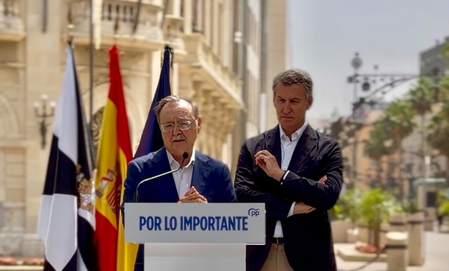
Brussels, Aug 6 (IANS) About 100 people died during a mass border crossing into Spain’s North African enclave of Ceuta last week, Ceuta President Juan Jesus Vivas told an extraordinary meeting of the European Parliament’s Committee on Civil Liberties, Justice and Home Affairs on Thursday.
Vivas said about 80,000 people entered Ceuta, nearly 75,000 of whom subsequently returned voluntarily, Xinhua News Agency reported.
Between 3,000 and 5,000 migrants remain in the enclave, leaving reception centres overwhelmed and creating a severe humanitarian emergency, he said, calling for stronger security, more reception resources and greater support from EU agencies.
“An attack, a violation of territorial integrity. It is not a migratory crisis, but an episode in which the integrity of the city, of Spain, and of Europe has been called into question,” said Vivas, Italian News Agency Adnkronos reported.
According to Guillaume Mercier, European Commission spokesman, the European Commission maintains “very high” attention in view of August 15, a date indicated by various rumours and speculations for a possible new attempt to massively cross the border between Morocco and the enclave of Ceuta.
“Threats to external borders can happen, as we have seen. We have seen the alerts and are in contact with the Spanish authorities on this. Attention remains very high, in view of August 15. We are also in contact with Frontex and Europol. We remain very vigilant,” he stated during the press briefing in Brussels.
The European Commission is expected to disburse “additional” funds to Spain, to help it manage migratory flows in Ceuta, said spokesman Guillaume Mercier
“We have seen that through various channels, including Russian ones, the situation we saw on the ground last week has rapidly escalated,” he added.
He confirmed that the Commission received a first needs assessment from Spain on Wednesday and the Commission is rapidly examining the document to identify the best way to provide support.
According to the spokesperson, the next step “will be for Spain to submit a formal request to the Commission, in order to concretely demonstrate what we are doing. It will be additional support,” which “could cover a range of elements, starting from equipment and services for border management, given the current situation, and could also provide humanitarian and medical assistance.”
“Regarding European Union agencies, we have offered support through Frontex and the European Asylum Agency. Yesterday, a meeting was held between DG Home and the heads of the executive agencies to discuss a regular and coordinated exchange of information on how we can support Spain. Work is ongoing on several fronts. We are proceeding very quickly, as the situation evolves on the ground,” he concluded.
–IANS
ksk/as