




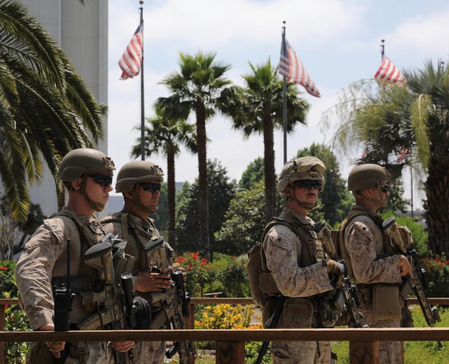
Washington, March 5 (IANS) More than 108,000 US soldiers are deployed or forward positioned across 160 countries, senior American military leaders told lawmakers, underscoring the global scale of US military operations even as Washington fights an ongoing conflict with Iran and confronts rising security threats from China and Russia.
Testifying before the Senate Armed Services Subcommittee on Readiness on Wednesday (local time), top Pentagon officials said American forces remain capable of sustaining global operations while responding to active combat missions in the Middle East.
Vice Chief of the Army Gen. Christopher LaNeve told senators that US forces are operating across multiple regions simultaneously, maintaining deterrence while responding to evolving threats.
“Today, over 108,000 soldiers are deployed or forward postured across 160 countries, securing our interests in the Western Hemisphere, deterring aggression in the Indo-Pacific, and responding to threats worldwide,” LaNeve said.
He said US soldiers in the Middle East are currently operating in a “complex and dangerous environment” amid the conflict with Iran and its regional proxies.
“They’re defending US forces and partners intercepting missiles and drones and protecting critical infrastructure,” he said.
LaNeve added that American troops continue to move fuel, munitions, and medical support across the theatre while coordinating intelligence and joint fires to respond rapidly to threats.
Senior Navy leaders said maritime forces are also engaged in operations across several regions while maintaining strategic deterrence.
Vice Chief of Naval Operations Adm. James Kilby told lawmakers the Navy had conducted combat operations and supported the Joint Force in multiple missions over the past year.
“As the Navy conducted combat operations and supported the Joint Force in achieving national objectives… the Navy conducted strikes against our adversaries and defended our allies in the Middle East,” Kilby said.
He added that US naval forces continue to operate across the Indo-Pacific region.
“In the Pacific, our sailors operate every day, deterring China and building partnerships,” he said.
Kilby said the Navy is working to improve readiness by reducing maintenance delays and modernising shipyards while pushing toward a goal of 80 per cent combat surge-ready ships, aircraft, and submarines.
Marine Corps leaders said their forces remain prepared for rapid deployments around the world, particularly in the Indo-Pacific, where tensions with China continue to grow.
“The Marine Corps provides unique value to the nation and joint force,” a senior Marine Corps official told senators.
“We are both the nation’s global response force and a persistent integrated stand-in force in the Indo-Pacific.”
Air Force Vice Chief of Staff Gen. James LaMontagne said the service is maintaining readiness while modernising its fleet and training new pilots.
“The most important thing the Air Force does for the joint force and for the nation is to fly and fix aircraft so that we are ready to answer the nation’s call,” he said.
LaMontagne said the Air Force is training about 1,500 pilots each year while developing new platforms, including the B-21 bomber and collaborative combat aircraft.
Space Force Vice Chief of Space Operations Gen. Michael Guetlein said space capabilities have become central to modern military operations.
“Recent events around the world clearly demonstrate the importance of the Space Force as part of the Joint Force,” he said.
He noted that the service recently launched new satellites for missile warning, navigation and space domain awareness.
However, the Government Accountability Office warned lawmakers that US military readiness still faces persistent structural challenges.
“The United States is fortunate to have the strongest military in the world, but our service members often meet demanding mission needs despite several significant and enduring readiness problems,” said GAO official Diana Maurer.
She said ageing equipment, maintenance backlogs and shortages of spare parts continue to affect readiness across several services.
–IANS
lkj/sd/