



Chandigarh, Nov 6 (IANS) Laying bare four decades of systemic subversion of the criminal justice system, former Delhi High Court judge Justice Shiv Narain Dhingra has said trials following the 1984 anti-Sikh massacre were conducted like an institutional “fraud” designed to shield influential political patrons.
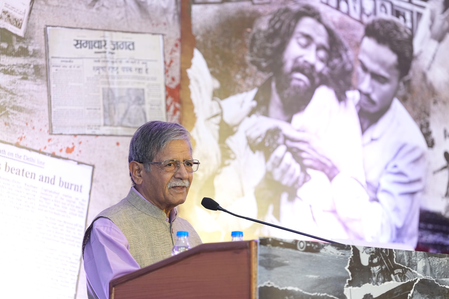
Speaking at the session, “Murder of Justice”, at the BJP’s ‘Zakhm 84 De’ conclave here this week, Justice Dhingra, who also headed the Supreme Court-mandated Special Investigation Team (SIT) in 2018, gave a chilling account of how the police machinery, procedural technicalities, and political patronage converged to bury accountability.
“No riot takes place on its own; every communal riot is managed and patronised,” Justice Dhingra said.
“In 1984, crowds from resettlement colonies were mobilised, armed, and handed specific lists to target Sikh households. What followed in courtrooms was a mockery of justice,” he said.
Justice Dhingra added, “When our justice delivery system operates with a dismal six per cent conviction rate, does an acquittal after two decades represent justice? If the accused brought before the Bench didn’t commit the murder, then who did? The state had an obligation to find out, but the system simply rolled over.”
Drawing from his tenure as Additional Sessions Judge at the Karkardooma Special Court handling East Delhi cases, Justice Dhingra highlighted the procedural traps deployed by the then-administration.
In the Trilokpuri massacres, police bundled over 200 distinct murders into a single omnibus first information report (FIR). Knowing that criminal procedural law forbids trying more than three offences together, the prosecution let an application to separate the cases languish for years.
Justice Dhingra recalled retrieving the stalled plea, directing independent chargesheets for each murder, and breaking it down into 200 distinct trials, bringing key political figures like H.K.L. Bhagat and local councillors to stand trial.
Successive inquiry panels were rotated between 1984 and 1992 solely to prevent the registration of formal criminal cases.
When FIRs were finally registered eight years later on commission recommendations, state defence lawyers cynically cited the “unexplained eight-year delay” as primary grounds to secure acquittals in trial courts.
Recalling an attempt by the CBI to arrest Congress leader Sajjan Kumar, Justice Dhingra recounted that sleuths arriving at 7 a.m. were forced to wait outside while a mob encircled the residence within 15 minutes. While local police refused to intervene or assist the central agency, Kumar’s lawyers secured anticipatory bail before noon.
Justice Dhingra noted that the CBI subsequently submitted an affidavit on his court record revealing that the official police case file had landed in the physical custody of Kumar’s defence counsel.
–IANS
vg/dpb