



Amsterdam, Aug 17 (IANS) The Red Fort attack in November 2025 and other major attacks in recent years in South Asia serve as proof that Pakistan-based terror groups are using all possible means to survive and thrive, leaving in their wake major headlines, high body counts and a palpable menace, a report has highlighted.
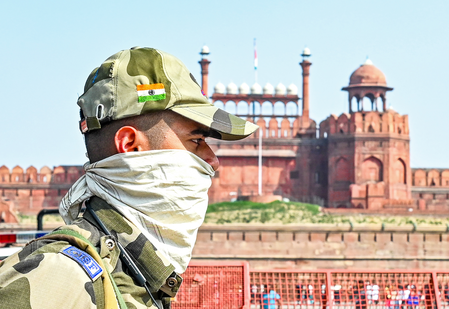
Last week, a terrorism monitoring team of the United Nations Security Council (UNSC) declared the deadly Red Fort suicide car bombing that killed 11 people the work of Al-Qaeda in the Indian Subcontinent (AQIS), which it warned is spreading its tentacles across the region.
The report by the Analytical Support and Sanctions Monitoring Team on terrorism to the Security Council said the attack last November “was officially attributed to AQIS”.
It warned that AQIS is emerging as a decentralised terrorist organisation from a disparate group.
The successes of these groups, even if limited in scale, could possibly mean that these entities may well have reached some sort of hand-in-glove understanding for logistical support with the Pakistani Inter-Services Intelligence (ISI), Junaid Qureshi, Director of the European Foundation for South Asian Studies (EFSAS), wrote in the Rising Kashmir.
“The ISI has mastered the art of creating new terrorist outfits which step into the shoes of other ISI-created terrorist groups operating in J&K once international pressure kicks in forcefully against the existing group. Thus, over the decades the prominence of JKLF was passed on to HM (Hizb-ul-Mujahideen) as the primary terrorist outfit fighting on behalf of the ISI in J&K after which it was taken over by the LeT (Lashkar-e-Taiba) once the heat against HM became unpalatable. Similarly, in recent years, especially after the 2008 Mumbai attacks, the LeT was replaced by the JeM (Jaish-e-Mohammed),” wrote Qureshi.
AQIS was founded in 2014 by Al-Qaeda leader Ayman al-Zawahiri. It “continued to evolve from a fragmented group into a regional terrorist entity; it established logistics and financial networks, working in decentralised small, scattered cells instead of large units”, the report said. It means that in a country like India where there is no scope for war-like operations, AQIS is adopting a tactic of urban guerrilla-like tactics.
“The future of these groups in South Asia depends on an extensive number of factors, and all possible outcomes must be explored. As it is unlikely that any of these groups will be able to physically hold territory in any South Asian country, they will most likely rely on increasing online radicalisation and recruitment methods. Attention must also be paid to Madrassas, many of which are fronts of extremist groups and are notorious for preaching radical interpretations of Islam and sending students to battlefronts, and these groups could potentially find a new generation of recruits within these Madrassas that are run by people sympathetic to the cause of these terrorist groups,” mentioned Qureshi.
The Indian security apparatus, he emphasised, would do well to recognise that apart from the established terrorist organizations like LeT, HM and JeM, the mysterious advent of these international terrorist organisations and their infrastructure of Madrassas, online presence, propaganda techniques, funding networks and new-age recruitment policies need to be monitored closely to ensure that it is not able to capitalise in the years ahead upon the trend of growing radicalization amongst sections of the youth in Jammu and Kashmir.
“The role of the ISI in strengthening such groups as part of a new strategy to keep violence alive in J&K in order to protect the pre-eminence of the Pakistani military establishment, especially, needs to be watched with a hawk’s eye and countered promptly and robustly,” warned EFSAS Director Qureshi.
–IANS
/as