




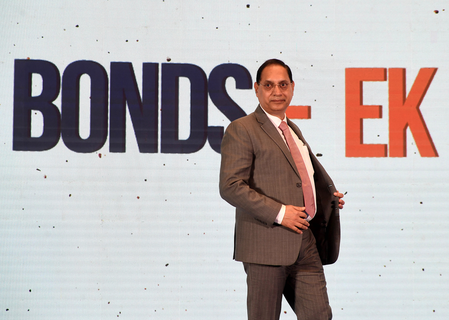
Mumbai, March 11 (IANS) Alternative Investment Funds (AIFs) have emerged as an important pillar of India’s capital markets and are increasingly playing a key role in financing sectors that strengthen the country’s economic resilience, the Securities and Exchange Board of India (SEBI) Chairman, Tuhin Kanta Pandey, said on Wednesday.
Speaking at the ‘IVCA Conclave 2026’ here, Pandey said AIFs are no longer on the margins of the financial system but are becoming a crucial channel linking private capital with productive sectors of the economy.
“The current geopolitical situation is a reminder that capital must do more than chase returns. It must also build resilience,” he said, adding that the AIF industry can help finance sectors such as renewables, energy storage, logistics and supply chains that are critical to strengthening India’s economic capacity.
Pandey noted that India now has more than 1,700 registered AIFs, with commitments standing at Rs 15.7 trillion and investments at about Rs 6.4 trillion as of December 2025, reflecting a compound annual growth rate (CAGR) of nearly 30 per cent over the past five years.
According to him, the industry is not only attracting commitments but is also steadily converting them into actual investments that are being deployed in the economy.
“With commitments close to Rs 16 trillion, there remains substantial capacity for future deployment. While AIFs are supporting growth today, they are also creating room for the next wave of entrepreneurship, infrastructure development and enterprise expansion,” Pandey said.
He added that AIFs are increasingly directing capital to areas where traditional finance often does not reach and are helping connect private capital more closely with productive enterprises. “To sustain India’s growth, we will need bank finance, public markets and well-governed pools of alternative capital,” according to the SEBI chairman.
“This is not just an industry story, it is also a development story,” he said.
However, Pandey also highlighted several challenges facing the sector, including mis-selling and product suitability, noting that AIFs are meant for sophisticated investors and involve illiquid assets, long holding periods and complex risk-return profiles.
He said managers and distributors must ensure clear disclosure of risks and key terms, adding that risk profiling must become a real discipline rather than a box-ticking exercise.
Another concern is whether sufficient capital is flowing into innovation-driven sectors. As of December 2025, only about Rs 205 billion of AIF capital has been invested in startups, he said, urging the industry to do more to support early-stage enterprises and emerging sectors.
Pandey also stressed the importance of credible valuation practices, especially since AIFs frequently invest in early-stage and illiquid assets. Weak or opaque valuations can erode investor confidence and distort price discovery when companies move towards public markets, he cautioned.
He added that the regulator’s approach has been to maintain a balanced framework by strengthening governance where necessary while providing flexibility where justified.
–IANS
ag/na