




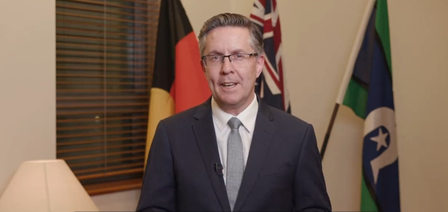
Canberra, Nov 1 (IANS) The Australian government has expanded access to subsidised medicines for patients with cystic fibrosis, blood cancer and thyroid eye disease under the country’s Pharmaceutical Benefits Scheme (PBS), Health Minister Mark Butler said on Sunday.
Under the changes taking effect on November 1, children aged six to 11 with cystic fibrosis who weigh less than 30 kg will be eligible for a granule form of Trikafta, a medicine targeting the underlying cause of the genetic condition.
The new formulation is designed to help children who have difficulty swallowing tablets. About 3,300 Australians are expected to benefit from the expanded listing each year, according to a government statement, Xinhua News Agency reported.
Without PBS subsidies, the treatment could cost patients more than 20,300 Australian dollars (about 14,200 US dollars) per prescription.
The government has also added Tepezza to the PBS as a treatment for active, moderate-to-severe thyroid eye disease, with around 310 Australians expected to benefit annually.
Meanwhile, subsidised access to Adcetris has been expanded to provide a new first-line treatment option for patients with advanced CD30-positive classical Hodgkin lymphoma, a type of blood cancer, benefiting an estimated 370 Australians each year.
The PBS listing for Repatha, a medicine used to treat high cholesterol, has also been amended to allow eligible patients to obtain larger quantities under the government’s 60-day prescription initiative.
Under the PBS, eligible patients will pay a maximum of 25 Australian dollars per prescription, or 7.70 Australian dollars for concession card holders.
The government said it has approved additional funding for 511 new and amended PBS listings since July 2022.
In October, Australia’s Therapeutic Goods Administration (TGA) said that it is developing reforms to strengthen sunscreen regulation and improve consumer confidence and the reliability of sun protection factor (SPF) claims.
The proposed reforms include strengthening sunscreen testing requirements, setting quality requirements for specific ingredients and limiting the SPF claims that cosmetic sunscreens can make, according to a TGA statement.
The agency said it will also review good manufacturing practice guidance to clarify expectations and responsibilities and support continued confidence in the quality and performance of sunscreen products in Australia.
The reforms follow a public consultation held from March to May that received almost 120 responses from industry, testing laboratories, health professionals, consumer groups, academia and other stakeholders.
Australia has the highest incidence of skin cancer in the world, the TGA said, adding that the primary objective of sunscreen regulation was to ensure product quality, safety and efficacy in protecting consumers from harmful ultraviolet radiation, and to reduce the incidence and impact of skin cancer.
–IANS
akl/