Canberra, March 16 (IANS) Australia will not send navy ships to protect oil tankers in the Strait of Hormuz, a senior government minister said on Monday.
Australia is well-prepared for the “economic crisis” caused by the ongoing conflict in the Middle East and would not be sending a warship to the region, said Minister for Infrastructure, Transport, Regional Development and Local Government Catherine King, also a member of Prime Minister Anthony Albanese’s Cabinet, according to the Australian Broadcasting Corporation (ABC) radio.
King said that Australia’s fuel stockpile was sitting at 37 days of petrol, 30 days of diesel and 29 days of jet fuel as of Monday after the government reduced minimum stockholding obligations and temporarily amended fuel quality standards to allow higher sulfur levels.
“We’re well-prepared here in this country to weather the economic crisis that is occurring as a result of the Middle East,” she said.
The federal government on Saturday issued a warning to citizens not to transit through Bahrain, Iran, Iraq, Israel, Kuwait, Lebanon, Palestine, Qatar, Syria, Yemen and the United Arab Emirates (UAE).
The Department of Foreign Affairs and Trade had previously issued travel warnings for all of those countries through its Smartraveller service, but said on Saturday that Australian citizens should also avoid transiting through them, even if they do not plan to leave the airport.
It said that the conflict is likely to escalate further and flights could change or stop suddenly, Xinhua news agency reported.
British Prime Minister Keir Starmer spoke with US President Donald Trump to discuss the situation in the Middle East and the disruption to global shipping caused by the closure of the Strait of Hormuz.
During the conversation on Sunday evening, Starmer stressed the importance of reopening the strategic waterway to help restore normal shipping routes and ease rising global costs, a statement from 10 Downing Street said.
Both leaders agreed to remain in close contact regarding developments in the region.
British Energy Secretary Ed Miliband said earlier on Sunday that ending the ongoing conflict is the “best and most conclusive way” to reopen the Strait of Hormuz, a strategic chokepoint through which roughly one-fifth of the world’s oil passes, warning that the situation is harming the global economy.
“The spike in oil and gas prices that we’re seeing is caused by the closure of the Strait,” Miliband told British media, adding that Britain wants to work with allies to seek to get the Strait reopened.
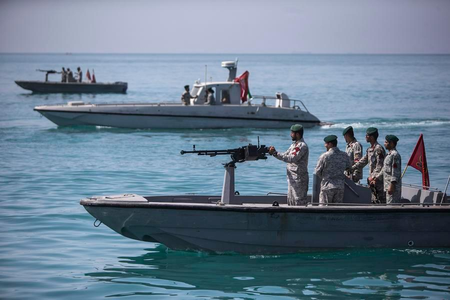
Trump said Saturday on social media that “many countries” would send warships to keep the Strait of Hormuz open, without offering any details.
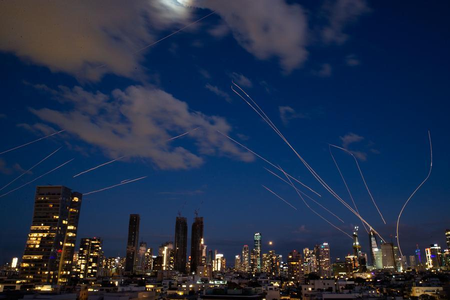
On February 28, Israel and the United States launched joint attacks on Tehran and other Iranian cities, killing Iran’s Supreme Leader Ali Khamenei, senior military commanders, and more than 1,300 civilians. Iran responded with waves of missile and drone strikes targeting Israeli and US bases and assets across the Middle East.
–IANS
jk/