



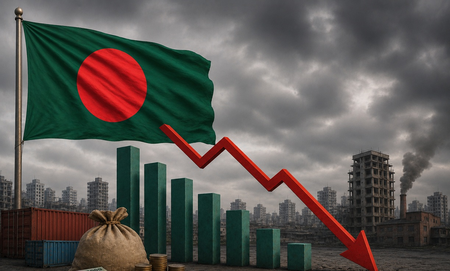
New Delhi, Oct 9 (IANS) Bangladesh’s economic policy priorities are being ridiculed as inequality widens and poverty rises while large infrastructure and defence purchases risk sidelining measures to protect the poor, a new report has said.
The report from Bangladesh-based The Financial Express said 2.1 million people slipped into poverty in the last fiscal year and World Bank projects that 62 million more people globally could be pushed into poverty by persistent inflation and an energy crisis.
Rising prices and power shortages are hitting manufacturing, reducing investment and cutting jobs in the private and informal sectors.
“Even the National Citizen Party (NCP) formed by the student leaders who spearheaded the July uprising no longer highlights its once pet subject of discrimination that has left society undesirably divided and unbalanced,” the publication said.
It also argued that unequal distribution of wealth shows no sign of abatement under the present system but that the inequality is deepening further.
The report criticised the government’s spending on major projects, saying the metro rail programme, with costs of over Tk2 trillion, accounts for about two‑thirds of the country’s annual development programme. The spending amounts to nearly a quarter of the national budget of Tk9.38 trillion. Further, recent aircraft procurement plans are another subject of ridicule.
Though the government was arm-twisted by America to procure Boeing aeroplanes, the deal signed with the EU for procurement of 10 Airbuses from the consortium of European aerospace was not under any pressure.
“The urgency of purchase looks more pressing from the Bangladesh side as Biman wants the delivery of the Airbus aircraft before 2030.Given the Bangladesh Biman’s performance record, this investment may prove injudicious or a waste of money,” the report noted.
The pay package for government employees has been increased without addressing the structural defects of supply chain and marketing that drive inflation.
Poverty surged from 18.7 per cent in 2022 to 22.5 per cent in the last fiscal and it is likely to reach 22.80 per cent in 2026-27, the publication noted.
—IANS
aar/ag