



Bern, July 25 (IANS) Bangladesh’s International Crimes Tribunal (ICT) has approved every arrest warrant request submitted by the prosecution since August 2024, without rejecting a single application. Its recent decision to issue arrest warrants against two journalists, on ‘unfounded grounds’, has raised concerns about the tribunal’s functioning, a report has stated.
The broader pattern has drawn scrutiny, with dozens of individuals detained by the Tribunal for months without formal charges, while some have reportedly been arrested without any credible evidence.
Among the most notable cases are 75-year-old former Bangladesh civil aviation minister Faruk Khan and 80-year-old Tawfiq-e-Elahi Chowdhury, a former Energy Advisor to the country’s ex- Prime Minister Sheikh Hasina, both of whom have been detained without charges for 20 months, journalist David Bergman wrote in Switzerland-based news website ‘Justice Info’.
“These prolonged pre-charge detentions reflect not only the ICT’s rules on arrest but also the Tribunal’s practice of refusing bail. Unlike the Rome Statute, ICT rules of procedure set out no criteria to guide the Tribunal in determining whether bail should be granted or not – a significant due process gap in itself. Rule 9(6) simply states that every three months the Tribunal may review its ‘order relating to the detention of the accused’. In practice, the Tribunal has not released a single detained person on bail,” Bergman stated.
“Its most telling illustration is the Tribunal’s treatment of Rule 9(5), which, in effect, requires the Tribunal to release a detained person who has spent a year in custody without charge – unless ‘exceptional circumstances’ exist, in which case the judges must record their reasons in writing. Yet, the Tribunal has not released a single person who has crossed that one-year threshold, nor has it put on record any ‘exceptional circumstances’ to justify not doing so, as the rules require,” he added.
Citing the case of Tawfiq-e-Elahi Chowdhury, who had been detained for nearly a year and a half, Bergman said that when the former advisor formally applied for bail in April 2026, the Tribunal responded by adjourning the hearing on his application for three months.
According to Bergman, those accused before the ICT frequently spend weeks or months without receiving any written details of the allegations against them.
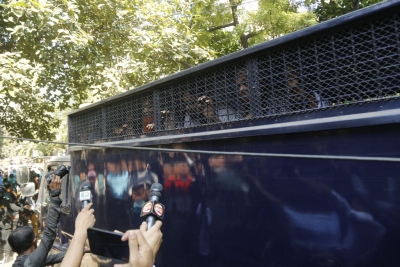
He pointed to the cases of Bangladeshi journalists Mozammel Babu and Farzana Rupa, who had still not received copies of the allegations more than two months after their arrest on May 14, 2026.
“This delay is not uncommon. And it is not just a procedural technicality. The right to be informed promptly of the reasons for one’s arrest is a foundational due process guarantee, recognised in the International Covenant on Civil and Political Rights, in the Rome Statute, and in the Awami League-era rules that the current government chose to weaken,” Bergman noted.
–IANS
scor/ksk/as