Islamabad, April 26 (IANS) For Islamabad, it would be wiser to “redirect its diplomatic initiatives toward internal stabilisation rather than focusing on mediating distant conflicts”, an opinion piece in the local media said.
The neighbouring country has attempted to mediate between the US and Iran amid the West Asia conflict.
In the middle of the war in the Middle East, Pakistan and China had announced a Five-Point Initiative for restoring peace and stability in the Gulf and the wider Middle East in March, contributing columnist Samee Ullah wrote in the Pakistan Observer.
The announcement reflected a joint commitment to dialogue, cooperation and a more secure future for the region, he noted.
The columnist said that among such a “diplomatic ambition”, “Pakistan must carefully balance its longstanding partnerships with countries like China and Iran, while at the same time maintaining a measured and constructive posture toward other key players”.
Thrusting itself forward as a mediator, Islamabad also hosted quadrilateral talks with Saudi Arabia, Egypt, and Turkey.
Samee Ullah, who is based in Islamabad, highlighted that Pakistan’s domestic Shia minority shared border vulnerabilities and deep economic ties via the China-Pakistan Economic Corridor, which brings the country to a crossroads to balance between key parties.
“For China, Pakistan’s efforts seem like a practical step linked to the Belt and Road Initiative, focusing on reopening the Strait of Hormuz to prevent disruptions in energy supplies,” the columnist wrote.
He cautioned that if Pakistan gives in to much of the US’s demands, it will betray China’s vision of a multipolar order where America retreats. Moreover, he opined that Iran’s push for Beijing as a guarantor may further sideline Pakistan. What may force the country into “awkward compromises” is its recent mutual defence pact with Saudi Arabia, which, along with other Gulf nations, demands the reopening of the crucial Strait of Hormuz.
The columnist contends in the Pakistan Observer piece that in the past, the Islamic nation has been a US ally against the Soviets in Afghanistan, but post the 9/11 attacks, it turned towards China amid CPEC’s $62 billion infusion and 80 per cent arms dependency, while maintaining Iran ties despite sectarian risks.
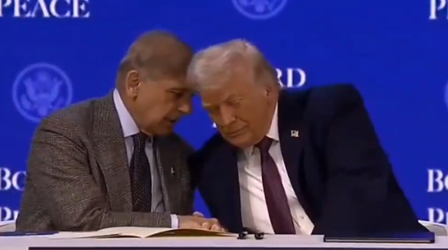
“Efforts to maintain a non-aligned or ‘no camps’ approach have become increasingly difficult, especially as renewed engagement with the United States under President (Donald) Trump highlights competing pressures from both Iran and China,” Samee Ullah mentioned.
In its mediation attempt, the real test for Pakistan lies in maintaining “strict diplomatic balance”.
Calling Pakistan’s economy “fragile”, he said that remittances from Gulf workers are under threat from regional instability.
According to Samee Ullah, militancy and political polarisation are part of the nation’s internal security challenges, and Pakistan should spend its resources in strengthening its “domestic resilience”.
Further, the columnist asserted that prioritising counterterrorism reforms, economic recovery through IMF-backed measures and infrastructural development would result in substantial gains on the external front and enhance Pakistan’s credibility in peace initiatives.
–IANS
cg/vd