



Washington, April 8 (IANS) The White House on Wednesday confirmed high-level engagement with China during the Iran crisis, signalling a broader geopolitical dimension to the ceasefire and upcoming negotiations with Tehran.
The White House said conversations took place between Washington and Beijing as tensions escalated, with both sides maintaining communication channels during the conflict.
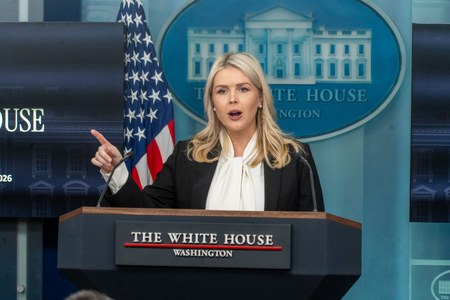
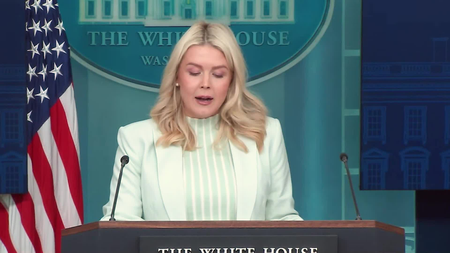
“With respect to China, there were conversations that took place between top levels of our government and China’s government,” White House Press Secretary Karoline Leavitt told reporters at a news conference here.
She added that President Donald Trump maintains “a great working relationship” with Chinese President Xi Jinping and indicated continued engagement ahead of a possible visit to China in the coming weeks.
The disclosure points to quiet coordination among major powers as the United States transitions from military operations to diplomacy following a two-week ceasefire window agreed with Iran.
Washington has framed the ceasefire as a direct outcome of sustained military pressure under “Operation Epic Fury”, which it says forced Tehran to step back and accept negotiations.
“The President’s maximum pressure and the leverage created by the success of Operation Epic Fury led to the Iranian regime asking for and ultimately agreeing to a ceasefire proposal with the United States,” Leavitt said.
She reiterated that the US military campaign had significantly weakened Iran’s capabilities, creating the conditions for diplomatic engagement.
At the same time, the administration cautioned that the ceasefire remains unstable.
“This is a fragile truce. Ceasefires are fragile by nature,” Leavitt said, warning that disruptions on the ground could complicate implementation in the coming days.
The next phase of negotiations is set to take place in Islamabad, where a US delegation led by Vice President J.D. Vance will hold in-person talks with Iranian counterparts.
The involvement of China, even indirectly, reflects the wider strategic stakes in the Middle East, where Beijing has expanded its diplomatic footprint in recent years, including brokering rapprochement between regional rivals.
For Washington, maintaining dialogue with Beijing during the crisis appears aimed at preventing escalation and ensuring broader stability as negotiations proceed.
The Iran crisis also intersects with global economic concerns, particularly energy security. Any disruption in the Strait of Hormuz — a key shipping lane — carries immediate consequences for global oil flows and prices.
–IANS
lkj/dan