



New Delhi, Feb 8 (IANS) The Apex Business Chamber CII has prepared a roadmap for setting up a scalable model pilot air corridor connecting Gurugram, Connaught Place, and Jewar International Airport to reduce transit time and provide a high-impact solution to urban congestion.
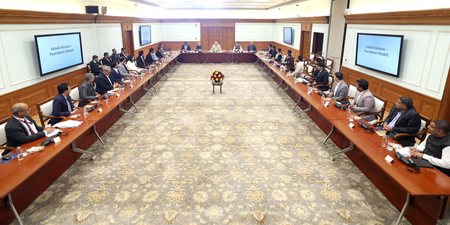
The CII report titled ‘Navigating the Future of Advanced Air Mobility in India’, launched by Civil Aviation Minister Ram Mohan Naidu Kinjarapu, is also expected to contribute to India’s Net-Zero 2070 goals through zero-emission electric Vertical Take-Off and Landing (eVTOL) aircraft technology.
Setting up a clearly defined and empowered AAM regulatory function within the Directorate General of Civil Aviation (DGCA) will ensure the safe and efficient integration of Advanced Air Mobility solutions like Electric Vertical Take Off and Landing (eVTOL) or air taxis into Indian airspace, according to a CII statement issued on Sunday.
This specialised entity within DGCA would focus on developing airworthiness, operational, and safety standards tailored to emerging technologies, including electric Vertical Take-Off and Landing (eVTOL) aircraft and low-altitude urban flight operations. The report outlines a phased and structured roadmap for the safe integration of next-generation air mobility solutions into India’s aviation ecosystem.
Collaborating with urban planning bodies and Smart City missions to embed AAM corridors and vertiport locations within master plans will ensure land availability, multimodal connectivity, and grid integration for battery charging infrastructure, the report further states.
As India prepares for advanced air mobility, rooftop vertiports offer an efficient, scalable, and cost-effective solution, especially in cities like Delhi, Mumbai, and Bengaluru. However, under current DGCA regulations, routine commercial vertical take-offs and landings from rooftops are not yet permitted, and any future enablement would be subject to the evolution of applicable regulatory frameworks and safety assessments, the report points out.
It states that rooftops are being proposed as a solution, since acquiring land for new ground-based vertiports is prohibitively expensive and often delayed by regulatory clearances. Rooftops, on the other hand, offer existing, underutilised real estate-ideal for rapid deployment and rooftop vertiports can be placed within commercial hubs, hospitals, tech parks, and residential towers-closer to where people live and work.
The report also calls upon public financial institutions, including SIDBI, banks, and government grant agencies, to establish dedicated financing instruments for Advanced Air Mobility. These could take the form of sector-specific infrastructure funds, venture leasing mechanisms, or credit enhancement facilities aimed at reducing investment risk and enabling long-term capital flows.
The report recommends drone-based logistics operations focusing on cargo and essential medical supply deliveries over 50–100 km ranges. It also emphasised on early planning for take-off and landing infrastructure, urging identification of high-potential urban zones such as NCR, Bengaluru, and Mumbai through Public-Private Partnerships (PPPs).
By grounding its analysis in a corridor-based case study and focusing on operational and regulatory readiness, report on “Navigating the Future of Advanced Air Mobility in India” serves as a strategic reference for policymakers, regulators, investors, and industry stakeholders shaping the next phase of safe, scalable, and sustainable three-dimensional mobility in India, the CII statement added.
–IANS
sps/svn