




Thiruvananthapuram, July 25 (IANS) Vizhinjam International Seaport is set to achieve another landmark in its evolution with the commencement of full-fledged gateway export-import (EXIM) cargo operations from August 18, transforming the country’s newest deep-water port from an exclusive international transshipment hub into a gateway for India’s overseas trade.
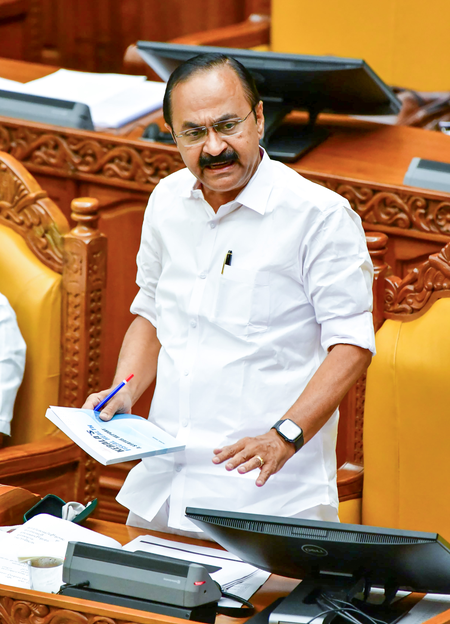
Chief Minister V.D. Satheesan will formally inaugurate the commencement of EXIM operations, marking yet another defining milestone in the journey of Kerala’s largest infrastructure project.
With the launch, Vizhinjam will begin handling cargo originating from and destined for Indian importers and exporters, substantially expanding its commercial role in the country’s maritime sector.
The Commissioner of Customs (Preventive), Kochi, has issued the detailed operational framework governing the commencement of gateway cargo operations.
The public notice lays down the statutory procedures, customs regulations and operational protocols to be followed by shipping lines, exporters, importers, customs brokers, terminal operators and logistics service providers.
Until now, Vizhinjam has functioned exclusively as an international transshipment hub, where containers are transferred between large mother vessels and feeder ships.
From August 18 onwards, the port will also handle India’s export and import cargo, opening a new avenue for businesses in Kerala and neighbouring regions to access international shipping services directly through Vizhinjam.
Since a Container Freight Station (CFS) is yet to become operational, Customs has prescribed a phased rollout.
Imports will initially be restricted to Direct Port Delivery (DPD) of Full Container Load (FCL) containers, with importers required to move cargo directly from the terminal to their premises within 48 hours.
Less than Container Load (LCL) cargo and containers requiring de-stuffing or CFS examination will not be permitted during the initial phase.
Exports will likewise be confined to Direct Port Entry (DPE) of factory stuffed, self-sealed or Customs-sealed FCL containers.
Loose cargo requiring stuffing or examination within the port premises will not be accepted until additional infrastructure is commissioned.
The notification also permits road transshipment of containerised cargo between Vizhinjam and Inland Container Depots (ICDs), Special Economic Zones (SEZs), Land Customs Stations and other notified Customs stations under the Sea Cargo Manifest and Transhipment Regulations (SCMTR), 2018.
All stakeholders have been directed to carry out cargo documentation electronically through the ICEGATE platform in accordance with the SCMTR framework.
Customs regulation of EXIM cargo will be undertaken in coordination with Vizhinjam International Seaport Ltd. (VISL), Adani Vizhinjam Port Private Ltd. (AVPPL), the Mercantile Marine Department, Port Health Organisation, Bureau of Immigration, Coastal Police, authorised banks and other government agencies.
The commencement of gateway operations marks one of the most significant commercial milestones for Vizhinjam since its commissioning.
By adding direct import-export handling to its established transshipment business, the port takes a decisive step towards emerging as a comprehensive maritime logistics hub and strengthening Kerala’s position on the global shipping map.
The inauguration will also carry symbolic significance.
Satheesan becomes the third Chief Minister to preside over a defining phase of the Vizhinjam project after Oommen Chandy, whose government steered the project into implementation, and Pinarayi Vijayan, under whom the port was completed and commissioned as an international transshipment hub.
With the launch of gateway EXIM operations, Vizhinjam enters the next chapter of its commercial journey.
–IANS
sg/rad