



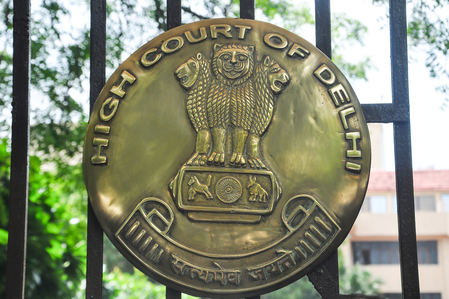
New Delhi, May 29 (IANS) The Delhi High Court on Friday upheld the validity of the Telecom Regulatory Authority of India’s (TRAI) regulations capping television advertisements at 12 minutes per clock hour.
A division bench of Justices Anil Kshetarpal and Amit Mahajan dismissed a batch of petitions filed by general entertainment, news, and regional broadcasters challenging Rule 7(11) of the Cable Television Network Rules, 1994, and Regulation 3 of the Standards of Quality of Service (Duration of Advertisements in Television Channels) Regulations, 2012.
The broadcasters had contended that the cap of 10 minutes for commercial advertisements and two minutes for self-promotional content per hour violated their rights under Articles 14 and 19 of the Constitution.
In its order, the Delhi High Court held that the TRAI had acted within its statutory powers in prescribing the limit, and observed that the regulation was aimed at protecting viewers from excessive commercial interruptions while maintaining the quality of service.
“TRAI’s statutory power to regulate the prescribed time for advertisements can be deduced from Section 11(1)(b)(v) of the Act of 1997,” the Justice Kshetarpal-led Bench said, adding that the TRAI’s mandate includes enhancing the quality of viewers’ experience and balancing the interests of broadcasters and consumers.
Observing that television viewers cannot skip or fast-forward advertisements in the same manner as users of digital platforms, the Delhi High Court said excessive or uneven advertising directly impairs consumers’ right to a fair viewing experience.
“The measure taken by TRAI to limit the advertisements to 12 minutes per clock hour, is in pursuance of the recognised QoS objective of TRAI, aimed at reducing excessive commercial breaks and preventing the artificial clustering of advertisements,” the judgment said.
The bench rejected the argument that the restriction infringed broadcasters’ freedom of speech and expression, holding that the grievance essentially related to loss of advertising revenue and therefore fell within the ambit of the freedom to carry on business under Article 19(1)(g), which is subject to reasonable restrictions in the public interest.
“Article 19(1)(g) of the Constitution does not guarantee profitability, and certainly not a right to monetise public property beyond reasonable structural limits imposed in the common good,” it observed.
The judgment added that airwaves and spectrum are scarce public resources held by the government in trust for the people and cannot be subjected to unfettered commercial exploitation.
“The broadcasters cannot claim an unfettered right to exploit spectrum for commercial purposes. Their use of such resources is subject to licensing conditions, statutory frameworks, and regulatory oversight,” the Delhi High Court said.
Referring to Supreme Court precedents treating spectrum as a finite public resource, the judgment held that regulation of advertisement time was linked to the constitutional mandate under Articles 39(b) and 39(c) to ensure that material resources of the community are utilised for the common good.
According to the Delhi High Court, the framework represents a “constitutionally sound exercise” of regulatory authority and advances consumer interest while ensuring equitable utilisation of broadcast spectrum. Highlighting the consumer-centric objective of the regulation, it added that the impugned regulations were introduced following widespread complaints about excessive and disruptive advertisements affecting viewing experience.
Concluding that the 12-minute ceiling is a neutral, time-based restriction that regulates the quantity of advertisements rather than their content, the bench held that the framework neither violates Articles 14 and 19 nor suffers from arbitrariness.
“Rule 7(11) of the Rules of 1994 and Regulation 3 of the Regulation of 2012, as amended in 2013, constitute a constitutionally valid exercise of regulatory power, striking a proportionate balance between broadcaster rights and the public interest in efficient and fair use of broadcast spectrum,” the Delhi High Court said while dismissing all 17 petitions.
–IANS
pds/vd