



New Delhi, Aug 18 (IANS) The government on Tuesday approved an incentive scheme to accelerate the expansion of domestic piped natural gas (PNG) connections, with the aim of making clean, safe and affordable cooking fuel accessible to more households across the country.
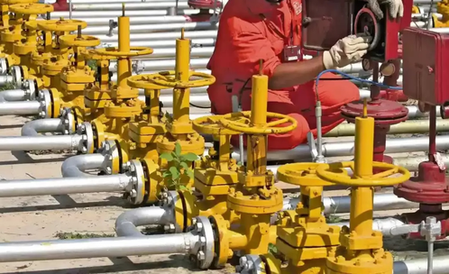
The Incentive Scheme for Promotion of Domestic PNG Connections will come into effect from September 1, 2026. It is designed to encourage City Gas Distribution (CGD) companies to convert unbilled PNG connections into active, billed connections and expand their household PNG networks into new areas.
India currently has around 1.74 crore domestic PNG connections. Under the new scheme, CGD entities will receive incentives for every incremental billed domestic PNG connection achieved above the threshold level fixed for their respective geographical areas.
Eligible CGD entities will be allocated an additional 200 SCM of domestically produced, lower-priced APM gas for every incremental billed domestic PNG connection achieved during the performance period. The scheme will be implemented in two tranches over a period of six months.
The additional allocation of APM gas is expected to help CGD companies substitute costlier liquefied natural gas (LNG) currently procured for their Compressed Natural Gas (Transport) segment. This will lower their overall gas sourcing costs and provide a stronger financial incentive to expand domestic PNG connections.
According to the government, the resulting savings could reduce the payback period on capital expenditure incurred for domestic PNG connections from around 10 years to approximately three years. This is expected to encourage CGD companies to accelerate network expansion and connect more households to piped cooking gas.
For consumers, PNG offers several advantages over conventional cooking fuels. Unlike LPG cylinders, PNG is supplied directly to homes through underground pipelines, eliminating the need to book, store and replace cylinders. Consumers are billed according to their actual metered consumption, similar to electricity and water services.
PNG is also considered safer as it is supplied at low pressure and is lighter than air, allowing it to disperse quickly in the event of a leakage. As a cleaner-burning fuel, it produces fewer pollutants than many conventional cooking fuels and can contribute to improved indoor air quality and lower carbon emissions.
–IANS
pk