



New Delhi, June 16 (IANS) India’s fibre consumption is likely to rise from about 15 million metric tonnes now to 23 million metric tonnes by 2030, and a surge in sustainable, plant‑based fibres will transform the country’s agricultural residue into export revenue and higher rural income, a new report has said.
The government through multiple schemes and other dedicated interventions is supporting a ‘New Age Fibre movement.’ New Age Fibres are sustainable, plant-based materials that blend India’s traditional knowledge with modern innovation, said the report in Good Morning Kashmir.
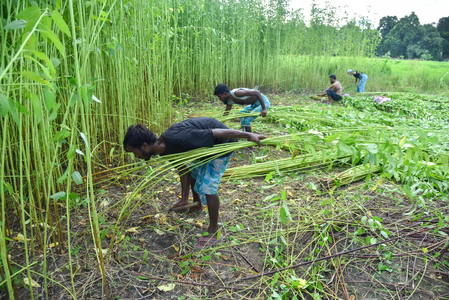
The movement seeks to revive traditional fibres such as banana, bamboo, hemp, flax, ramie, sisal, milkweed and kapok for high-value uses in textiles, defence gear biodegradable composites, and premium products.
“Today, at the cusp of a global sustainability revolution, India’s ancient knowledge of fibre is our greatest competitive advantage,” the report said.
India’s “5,000 years deep civilisational” relationship with fibre since the legendary muslins of Mohenjo-daro, has always been the lifeblood of the country’s rural economy.
Now the global demand for India’s ethical, sustainable, and high-performance natural fibres has surged, the report noted.
The government has included a dedicated Rs 300 crore component for New Age Fibres in the Mission for Cotton Productivity within a broader Rs 5,664 crore program for 2026–31. The National Fibre Mission announced in the 2026–27 budget has components to scale production and brand development.
“KRISHI-SUTRA for cultivation and raw material development, INFINITY for research and innovation, GRAM-SETU for infrastructure and enterprise creation, and GMPS for branding and market development,” are among these components.
The report mentioned that the strength of this policy framework stems from decades of scientific research.
It cited examples of milkweed being subject to 18 years of research at the Northern India Textile Research Association (NITRA), and finally selected for defence applications such as sleeping bags for soldiers operating at minus 20 degree Celsius. These are 10 per cent lighter than polyester alternatives, warmer than wool, and CLO/Cell certified, the report noted.
Fibre blending is India’s forte in which multiple fibres are combined, such as milkweed for thermal lightness, wool for warmth, bamboo for breathability, and cotton for softness.
—IANS
aar/na