




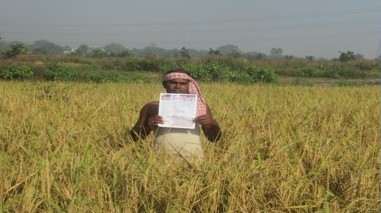
New Delhi, July 24 (IANS) Soil Health Card Scheme has generated over 25.89 crore cards and the National Mission on Natural Farming (NMNF) has expanded to 18,786 clusters covering 8.80 lakh hectares, the government said on Friday, outlining national initiatives to promote scientific soil management.
Around 7.17 lakh demonstrations promoting balanced fertiliser use have been conducted through advisories as part of Soil Health Card Scheme supported by Agricultural Technology Management Agencies and Krishi Vigyan Kendras, an official statement said.
Public outreach efforts, including the Khet Bachao Abhiyan, are encouraging wider adoption of sustainable practices.
Around 70,002 Krishi Sakhis have been trained to support the dissemination of soil health advisories at the grassroots level. The School Soil Health Programme registered 4,430 schools and 1,29,167 students in 2025‑26, the statement added.
Digital platforms, geospatial mapping and artificial intelligence are improving soil assessment and advisory services, strengthening productivity, resilience and long-term agricultural sustainability.
As more than 46 per cent of the workforce is employed in agriculture and allied activities, soil health has a direct influence on rural incomes, food systems and economic stability.
India has expanded its focus on sustainable soil and land management, the statement said, adding that national efforts span climate resilience, natural farming, soil mapping, and digital agriculture.
Initiatives such as the National Mission for Sustainable Agriculture (NMSA) and the National Mission on Natural Farming (NMNF) promote resilient and resource-efficient agricultural practices. The Soil Health Card Scheme further supports informed nutrient application through soil testing and advisory services.
Government interventions including National Mission for a Green India, National Mission for Sustainable Agriculture and the Carbon Credit Trading Scheme support practices that increase soil organic carbon and enhance long-term carbon storage.
In pursuance of India’s commitments under its Nationally Determined Contribution (NDC), National Mission for a Green India (GIM) aims to create an additional carbon sink of 2.5-3.0 billion tonnes of CO₂ equivalent by 2030.
As per the India State of Forest Report (ISFR) 2023, an additional carbon sink of 2.29 billion tonnes of CO2 equivalent was created between 2005 and 2021, demonstrating significant progress towards this goal.
—IANS
aar/pk