




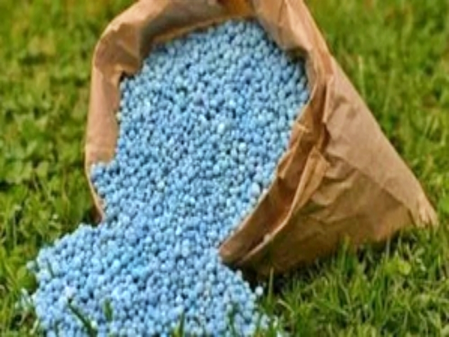
New Delhi, May 18 (IANS) The government’s subsidy payment for fertilisers is likely to go up by around Rs 15,000 crore during the April-June quarter of the current financial year due to the rising costs of imports triggered by the West Asia crisis, source said.
Additional Secretary, Department of Fertilisers, Aparna S. Sharma, on Monday, confirmed the rise but did not specify by how much.
“The subsidy bill will go up, but by what percentage is something I cannot say.”
Despite the cost pressures, Sharma said fertiliser availability for the 2026 kharif season remains “comfortable”, with stocks exceeding 51 per cent of the total requirement of 390 lakh tonne, the gap being bridged through diversified import sourcing. Current fertiliser stocks stand at 200.9 lakh tonne, she added.
“Overall, the situation remains strong, stable and comfortable,” Sharma remarked.
Domestic production is running at approximately 80,000 tonnes per day, with output since the onset of the West Asia crisis at 86.2 lakh tonne — slightly below the 93 lakh tonne recorded in the same period last year.
Sufficient gas supply is available for urea plants, she added.
India has been sourcing fertiliser imports from regions outside the Strait of Hormuz, and around 22 lakh tonnes have been imported so far.
The Department of Fertilisers is also reviewing the availability of other inputs for urea and complex fertiliser manufacture. Subsidy payments are being cleared on a weekly basis through the Integrated Fertiliser Management System.
To ensure zero shortage during peak demand, Indian fertiliser companies have initiated aggregated global tenders for 12 LMT of DAP, 4 LMT of TSP, and 3 LMT of ammonium sulphate. Additionally, tenders for raw materials, including 5.36 LMT of ammonia and 5.94 LMT of sulphur, are currently in progress. The government has also confirmed that approximately 7 LMT of NPKs secured from out of SOH are expected to arrive at Indian ports through May and June.
In a major relief for the farming community, the government announced there is no change in the Maximum Retail Price (MRP) of major fertilisers. The Department of Fertilisers continues to review input availability for urea and P&K production regularly and is clearing subsidy bills on a weekly basis to maintain supply chain liquidity.
India’s fertiliser security remains strong and stable, with the government having scaled up domestic production and imports to ensure availability consistently exceeds requirements of farmers across all major categories amid the Middle East crisis, a top official of the Department of Fertilisers said on Monday.
The country currently holds a comfortable stock of 199.65 LMT, covering more than 51 per cent of the seasonal demand, which is a sharp increase from the usual buffer levels of approximately 33 per cent at this time of the year. This reflects improved advance stocking and efficient logistics management, Sharma had said at a recent press conference.
The Empowered Group of Secretaries has held eight meetings to date to navigate availability challenges, ensuring that farmers receive fertilisers at affordable rates without disruption.
–IANS
sps/vd