




Gandhinagar, June 13 (IANS) Gujarat has emerged as the leading state in the implementation of the Pradhan Mantri-SVAMITVA Scheme, issuing more than half of all property cards prepared across India during the programme’s second phase and completing drone-based mapping in over 11,500 villages.
The achievement comes as the Centre marks 12 years of Prime Minister Narendra Modi’s tenure, during which the SVAMITVA Scheme has been positioned as a major initiative to provide legal ownership records for residential properties in rural areas and improve access to financial services.
According to official data, 32,35,260 property cards were prepared across the country during the second phase of the scheme, which began in 2021-22.
Of these, Gujarat alone issued 18,50,614 property cards, the highest number among all states and more than 50 per cent of the national total.
The government said the scheme addresses a long-standing challenge faced by rural residents who often lacked formal legal documentation for their homes and properties, limiting their ability to establish ownership rights and access various economic benefits.
Under Prime Minister Narendra Modi, the Centre has undertaken several initiatives aimed at rural empowerment over the past 12 years, with the SVAMITVA Scheme focusing on the creation of legal ownership records through modern surveying technology.
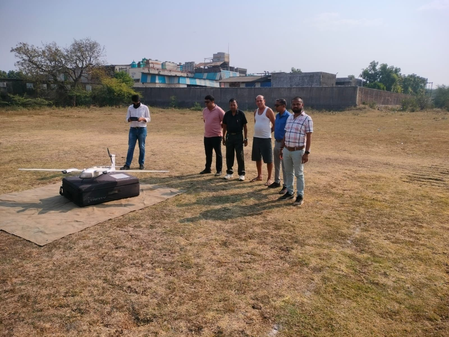
In Gujarat, the programme was implemented through a large-scale survey exercise using drone technology. A total of 14,900 drone flights were conducted, resulting in the mapping and promulgation of 11,511 villages.
Nationally, drone surveys were carried out in 58,197 villages during the second phase of the scheme.
Gujarat completed the largest share of the work, recording the highest number of property cards issued after completing the survey, verification and promulgation processes.
The implementation of the programme involved coordinated efforts by the Survey of India, the Gujarat Revenue Department and the Gujarat Panchayati Raj Department.
Officials said drone surveys and GIS-based mapping have helped create more accurate property records and improve transparency in rural planning and administration.
At the district level, Mehsana recorded the highest number of property cards in Gujarat, with 1,66,504 issued, followed by Ahmedabad with 1,53,125. Kheda, Banaskantha and Anand districts also crossed the one-lakh mark in property card issuance.
The government said that the transparent verification process followed before issuing property cards has helped reduce long-standing property disputes and court cases related to ownership claims in rural areas.
Officials stated that the scheme has transformed rural properties into recognised economic assets.
With legal ownership records now available, residents can use their property cards to access formal banking services and obtain loans more easily.
According to the government, bank loans of up to Rs 50 lakh have been sanctioned in Gujarat on the basis of property cards issued under the scheme.
Officials said this has created new opportunities for entrepreneurship, education and livelihood generation in villages.
The government further stated that the scheme has played an important role in the economic empowerment of women and socially disadvantaged groups by enabling greater access to property ownership records and financial resources.
To ensure wider public participation and awareness, more than 14,000 Gram Sabhas have been organised across the state.
Officials said these efforts are intended to extend the benefits of the scheme to a larger number of rural residents and support the broader objective of building a digitally enabled rural economy.
–IANS
mys/uk