




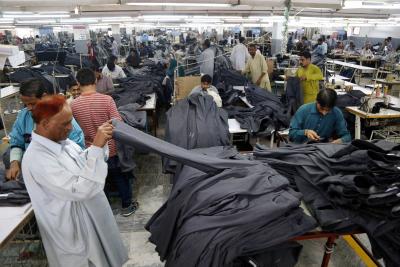
New Delhi, Feb 3 (IANS) The Pakistan Business Forum (PBF) has assessed the cost of doing business in the country to be around 34 per cent higher than in comparable regional economies, which means Pakistani exporters are losing price competitiveness in international markets that determine survival, according to an article in the Pakistani media.
For an economy that is trying desperately to pivot to export-generated growth, employment and foreign exchange, this disadvantage is simply unsustainable. Pakistan’s exporters have already felt the consequences. Despite a recovery in global trade across several sectors, exports have remained stagnant since 2022, the article in the Karachi-based Business Recorder observed.
It highlights that regional competitors such as India, Bangladesh, and Vietnam have expanded market share by maintaining lower cost structures, stable policy frameworks and predictable operating environments. Pakistan, by contrast, has allowed costs to spiral through policy choices that actively undermine industrial competitiveness.
Energy pricing is one of the most damaging factors. Electricity and gas tariffs for industry remain significantly higher than regional benchmarks. These costs are driven by inefficiencies, misaligned subsidies, and the continued treatment of productive sectors as a source of fiscal extraction rather than economic growth. For export-oriented firms, energy expenses feed directly into unit costs, eroding margins and pricing them out of competitive bids. Buyers do not wait for policy corrections; they shift orders elsewhere, the article lamented.
Tax policy has further compounded the problem. The burden of revenue collection continues to fall disproportionately on a narrow group of documented businesses. Instead of broadening the tax base and eliminating distortions, policy has relied on higher effective rates, withholding mechanisms and indirect levies that inflate costs throughout the supply chain. This approach penalises formal production and weakens competitiveness while leaving structural leakages untouched, the article observes.
Nowhere is this policy failure more visible than in the cotton sector. Cotton underpins Pakistan’s textile industry, the country’s largest export earner and a major source of rural livelihoods. Yet more than 400 cotton ginning factories have closed, disrupting the entire value chain, the article stated.
Consequently, Farmers face reduced demand and lower returns, ginners have been pushed out of operation, and textile manufacturers increasingly rely on imported cotton, placing additional strain on foreign exchange reserves. This situation is not sustainable, and all relevant authorities are aware of it, yet despite all the talk, there’s still nothing on the ground to offer any encouragement, the article added.
–IANS