




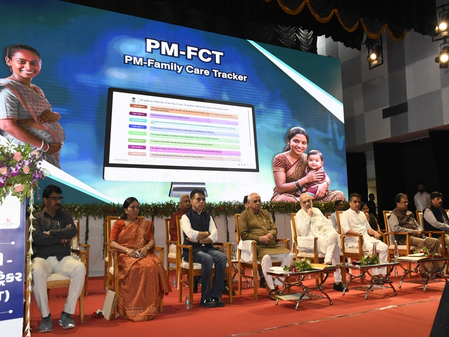
Gandhinagar, June 28 (IANS) A pilot digital platform aimed at integrating health, nutrition and education data from pregnancy through to adolescence has been launched in Gujarat’s Gandhinagar Lok Sabha constituency, in a move the government says is intended to strengthen monitoring of maternal and child welfare outcomes through a single unified system.
The initiative, named the PM-Family Care Tracker (PM-FCT), has been developed under the supervision of Union Home and Cooperation Minister Amit Shah and is positioned as an integrated data-based system linking multiple welfare programmes that have so far operated independently across departments.
According to details of the project, the platform will track beneficiaries from pregnancy up to 18 years of age, covering pregnant women, lactating mothers and children, with the aim of improving coordination between health, education and nutrition services.
The system is intended to provide a consolidated view of beneficiary data across schemes including the Integrated Child Development Services (ICDS), Reproductive and Child Health (RCH) programme, Poshan Abhiyaan and school health initiatives.
At present, different departments in Gujarat maintain separate identification systems for beneficiaries.
The Women and Child Development Department uses Aadhaar numbers and Poshan Tracker IDs, the Health Department operates through the TeCHO+ system, while the Education Department maintains its own Child Tracking System (CTS) IDs.
Under the new framework, these datasets are proposed to be linked through a single identifier, with Birth Registration Number (BRN) or ABHA ID designated as the common unique reference to enable data sharing across systems.
Officials associated with the project said the integration is expected to allow continuous tracking of health, education and nutrition indicators throughout a child’s development cycle.
The platform is designed to generate a consolidated profile of each beneficiary, enabling monitoring of key parameters such as immunisation status, anaemia, body mass index and birth weight, including focused attention on newborns with low birth weight.
The system will also track educational transitions, including enrolment in anganwadis and balvatikas, progression into formal schooling and school retention rates.
It will additionally monitor adolescent health indicators among girls aged 14 to 18, particularly haemoglobin levels and BMI, with provision for nutritional and counselling support where required.
Anthropometric data will be used to identify cases of stunting, wasting and underweight conditions among children, alongside monitoring of supplementary nutrition schemes such as take-home rations.
School attendance data will also be analysed to identify early signs of dropout risk, with gender-based analysis included to study differences in dropout patterns between boys and girls.
Academic performance will be tracked through standardised assessments, including SAT scores, with schools showing a high proportion of low-performing students flagged for targeted intervention.
A key feature of the platform is an automated alert mechanism described as “smart triggers”, which is intended to generate notifications when risk indicators are detected.
These alerts will be escalated to the relevant administrative levels, including taluka, district and state authorities, to ensure follow-up action is initiated and monitored until resolution.
The project includes defined outcome indicators to assess performance, focusing on high-risk pregnancies, immunisation coverage, nutritional status and early childhood development outcomes.
The pilot will initially operate in Gandhinagar Lok Sabha constituency. Following evaluation, authorities plan to expand the system across Gujarat and subsequently consider phased implementation in other states, depending on outcomes and requirements.
Officials said the objective of the initiative is to strengthen convergence between departments and improve the efficiency of welfare delivery by reducing fragmentation in data systems and enabling real-time monitoring of service delivery across key indicators.
–IANS
mys/pgh