




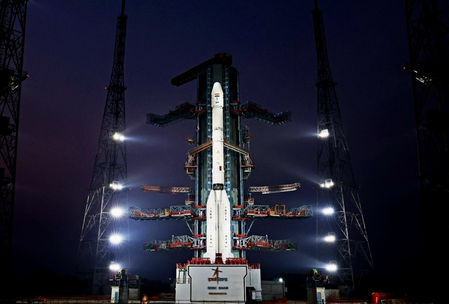
New Delhi, Nov 1 (IANS) The Indian Space Research Organisation’s (ISRO) successful launch of the Navigation Satellite NVS-03 from the Satish Dhawan Space Centre (SDSC) in Sriharikota is a major step forward in enhancing India’s satellite-based navigation capabilities.
The GSLV-F18 launch vehicle injected the Navigation Satellite NVS-03 into a precise Geosynchronous Transfer Orbit (GTO). After the first orbit manoeuvre was completed on October 31, further manoeuvres are planned to place it in its designated geosynchronous orbital slot at 111.75 degrees East.
The satellite is the third in India’s series of five next-generation navigation satellites and is designed to strengthen the Navigation with Indian Constellation (NavIC), enhancing India’s capabilities in satellite-based navigation. These satellites are designed to strengthen the coverage, accuracy and reliability of India’s regional navigation system.
A Satellite Navigation System is a network of satellites that provides positioning, navigation and timing information. These satellites continuously transmit signals containing their location and precise timing information. Receivers, such as smartphones, vehicles and navigation devices, use signals from multiple satellites to determine their precise location, speed and direction.
These systems support several applications, including route navigation, aircraft and ship tracking, precision agriculture, disaster management and telecommunications. Examples include the Global Positioning System (GPS) of the United States and NavIC of India.
NavIC covers the Indian landmass and a region extending approximately 1,500 km beyond India’s geopolitical boundary. It provides two types of navigation services catering to civilian and authorised strategic users. The open navigation service is available to civilian users. NavIC SPS signals are interoperable with other global navigation satellite system (GNSS) signals like GPS (USA), Glonass (Russia), Galileo (EU) and BeiDou (China). It also has an encrypted navigation service available exclusively to strategic users.
The five-satellite NVS series is being developed to augment the NavIC constellation and ensure continuity of indigenous navigation services. To date, NVS-01, NVS-02, and NVS-03 have been launched, while NVS-04 and NVS-05 are in the pipeline. ISRO is working to boost the coverage, reliability and availability of NavIC services.
The successful development and deployment of next-generation NavIC satellites mark another milestone in India’s journey towards Atmanirbhar Bharat in advanced space technology. By strengthening indigenous satellite navigation capabilities, India is enhancing its ability to provide reliable positioning, navigation and timing services independently. These advancements reduce dependence on foreign satellite navigation systems for critical applications. They also strengthen India’s technological capacity to design, develop and operate strategic space infrastructure.
–IANS
sps/vd