



Ahmedabad/New Delhi, June 9 (IANS) South Asia, and particularly India, can unlock significant opportunities for employment, investment, economic growth and poverty reduction through agricultural and food transformation with the help of key government initiatives, the World Bank Group said on Tuesday.
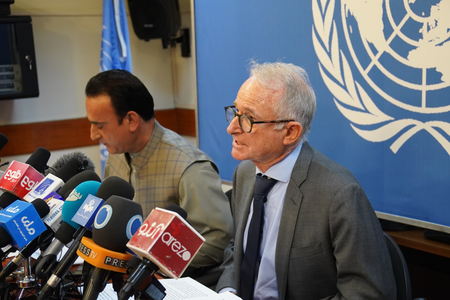
The Ministry of Food Processing Industries (MoFPI), in collaboration with the World Bank Group-led SAPLING initiative, inaugurated the Regional High-Level Policy Dialogue in Ahmedabad.
At the ‘SAPLING High-Level Policy Dialogue,’ the World Bank Group highlighted that transforming food systems beyond the farm can unlock significant opportunities.
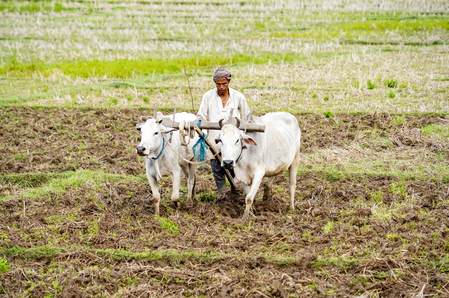
South Asia stands at a critical moment in its development journey. The region’s agriculture sector is valued at over $700 billion annually and employs nearly 43 per cent of the workforce.
However, despite its scale, agriculture contributes only around 16 percent of the region’s GDP. More than 30 percent of food produced in South Asia is lost or wasted every year — enough to feed nearly 300 million people, said experts.
They emphasised that the next phase of agricultural transformation lies not merely in increasing production but in expanding food processing, storage, logistics, marketing, and value addition. These activities can create millions of productive jobs while reducing food losses and increasing farmers’ incomes.
In India, food grain production has increased from 51 million tonnes in 1950-51 to more than 330 million tonnes today.
Processed food exports have also more than doubled over the past decade, rising from approximately $4.9 billion to over $10 billion. The food processing sector currently contributes around 9 per cent of manufacturing value added and nearly 13 per cent of India’s exports.
Despite this progress, significant opportunities remain, said experts.
Food processing currently accounts for only a small share of total employment, and a large proportion of agricultural produce still remains unprocessed. Strengthening cold chains, storage facilities, logistics networks, and market linkages can substantially increase value creation across the sector, they noted.
To accelerate this transformation, the World Bank Group is advancing a combined approach through AgriConnect and SAPLING.
AgriConnect, a global platform, aims to connect 300 million farmers to markets by 2030 through investments in infrastructure, policy reforms, and private capital mobilisation.
The initiative is already supporting projects and reforms across countries including India, Bangladesh, and Sri Lanka.
Participants at the Dialogue highlighted the importance of coordinated action by governments, businesses, investors, and development institutions. Investors were encouraged to support cold chains, warehousing, logistics hubs, processing clusters, agro-industrial parks, and emerging agri-enterprises.
Companies were urged to build integrated value chains, adopt digital technologies for traceability and quality assurance, and invest in workforce skills and capacity building.
–IANS
na/