




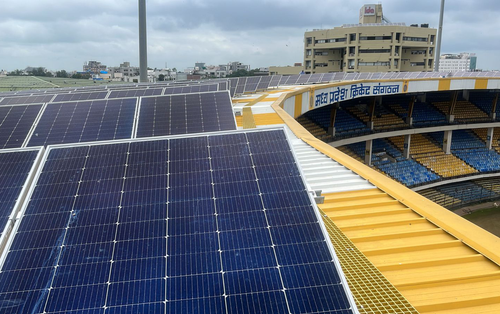
New Delhi, Jan 22 (IANS) Rapidly declining costs of electrotech like solar panels and batteries have unlocked a new energy path for countries like India that did not exist a decade ago when China was expanding its power sector.
In 2004, when China crossed 1,500 kWh of electricity use per capita, coal generation was about ten times cheaper than nascent solar photovoltaics (PV). This led to coal accounting for nearly 70 per cent of the growth in China’s electricity generation over a decade.
In contrast, as India now crosses 1,500 kWh of electricity use per capita, solar-plus-storage costs around half as much as new coal plants. This gap is widening as solar and battery costs fall along predictable learning curves, while coal power becomes more expensive with declining utilisation, according to an article published on the website of Ember, a global energy think tank.
Similarly, for the transport sector, in 2011, when China reached road transport oil demand of 150 litres of gasoline equivalent per capita, batteries were ten times more expensive than they are now, and the electric vehicle industry barely existed.
Meanwhile, India’s road oil demand at 96 litres per capita, is unlikely to ever reach even 150 litres per capita. Electric vehicles are already undercutting internal combustion engines on price which will lead to fall in the country’s oil import bill and reduction in pollution.
“The implication is that the energy pathway that makes economic sense for India today, as it rapidly industrialises, is not what made sense for China when it made the same journey,” the article states.
The article points out that India is already achieving greater success at earlier stages of development of renewable energy and Electric Vehicles.
Looking at electricity generation first. In India, solar reached 5 per cent of total generation at around $9,000 GDP per capita; in China, it took until about $23,000 to reach that level. Where solar goes, batteries are following fast: The share of renewable tenders paired with battery storage has climbed from about 12 per cent in 2021 to half in 2024, the article points out.
Meanwhile, India’s coal-fired generation in 2025 is set to fall year-on-year, though solar’s rise continues uninterrupted.
Ember and TERI’s least-cost pathway projects plateauing coal demand through to 2030.
Similarly, IEA’s Stated Policies scenario (which has historically underestimated electrotech growth) sees India’s coal demand in 2035 at roughly today’s level. In all likelihood, India will reach $20,000 GDP per capita without coal generation ever exceeding the levels China was burning at $5,000, the article added.
–IANS
sps/rad