



New Delhi, April 11 (IANS) The ongoing crisis in the Middle East has created opportunities for India in various ways, ranging from augmenting strategic petroleum reserve capacities at home to diversifying imports, a report highlighted on Saturday.
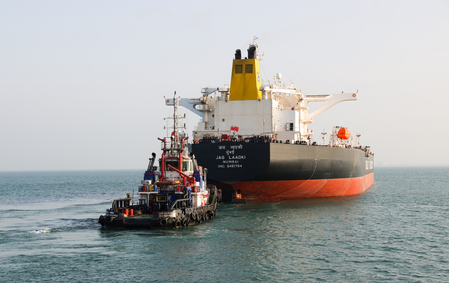
Writing for non-profit initiative Politeia Research Foundation, ORF Deputy Director Vivek Mishra mentioned that Argentina and the US have became important sources for India’s LPG imports during the current crisis, with the former more than doubling its exports to India in the first quarter of 2026 year-on-year, and the latter climbing rapidly in its LPG exports to India in March alone.
“In the first three weeks of March this year, India’s LPG imports from the US were 176,000 tonnes, surpassing the 89,000 tonnes received from the Middle East. Subsequent waivers on Iranian and Russian crude and petroleum products widened India’s options,” he wrote.
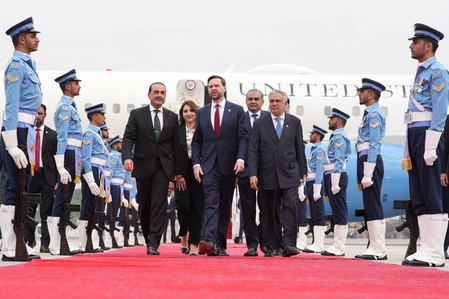
The negotiations in Islamabad, he noted, remain key to how both Iran and the US position themselves apropos the ceasefire. Focus also remains on how the talks can best yield a temporary modus vivendi to open the Strait of Hormuz.
“On the downside, the more intractable ends that have kept the US and Israel embroiled in the region, such as the question of uranium enrichment by Iran, possible extraction or removal of enriched nuclear material from Iran, removal of sanctions on Iran, and other issues outlined in the Iranian 10-point agenda, are issues that cannot be resolved in a few meetings. For reference, the JCPOA, while being negotiated in peacetime, took more than two years under the Obama administration,” Mishra opined.
For India, he wrote, everything that has unfolded since the Gaza war and culminated in the Iran-US-Israel conflict should serve as a lesson in preparing to live in a perpetual era of conflict punctuated by peace.
“Both war and diplomacy are changing their character in ways that seem to render the traditional toolkits anachronistic,” he emphasised.
According to Mishra, the Iran-US war has also revealed the strengths and limitations of the military and geopolitical strategies of major and regional powers.
“For one, the Iran-United States war constituted a definitive turning point in the changing nature of modern warfare that began with the Russia-Ukraine war. From the use of drones, lessons in attrition and a glimpse into a nation fighting for its existence, to testing the credibility of extended conventional deterrence by the US, the US-Iran war has been demonstrably revealing.”
He detailed that some of the 10-point conditions that Iran has laid out seem to be non-starters, including continued control of the Strait of Hormuz and the US acceptance of Iran’s enrichment.
“It is going to be extremely challenging for the Trump administration to impose conditions on Iran or accept Tehran’s conditions. What appeared to be initially doable by the Trump administration – galvanising internal opposition against the Islamic regime – now seems more distant. Continued bombing of Iran and its strategic assets by both Israel and the US has created internal consternation against the Trump administration, even among people who initially thought the attacks to be an opportunity for regime replacement with a democratic system,” wrote Mishra in Politeia Research Foundation (PRF).
The US-Iran war, he stated, has also become a testing ground for ideas, tactics and strategies that were hitherto considered only possibilities.
“The closure of the Strait of Hormuz and the use of 30,000-pound GBU-57 bunker buster bombs, also known as Massive Ordnance Penetrator, until now a valuable proposition for study and assessments, became a reality. Even as the war in the Middle East raged, one of the most prominent assessments was that it could fundamentally change the region for the foreseeable future. In turn, this also meant that America’s own role in the region would have changed,” he detailed.
–IANS
/as