



New Delhi, Jan 14 (IANS) Indian Railways is rapidly transforming freight transportation in the country, setting new benchmarks in speed, efficiency and reliability through its Dedicated Freight Corridor network, Ministry of Railways said on Wednesday.
The modern freight system is helping move goods faster and at lower costs, while also easing pressure on traditional railway lines used by passenger trains.
In a major achievement, the Dedicated Freight Corridor Corporation of India Limited (DFCCIL) recorded the highest-ever number of freight train interchanges on its network.
On Sunday, January 5, 2026, a total of 892 interchange trains were handled in a single day between the Dedicated Freight Corridor and five zones of Indian Railways, the ministry said.
This surpassed the previous record of 865 trains, which was set just a day earlier on January 4.
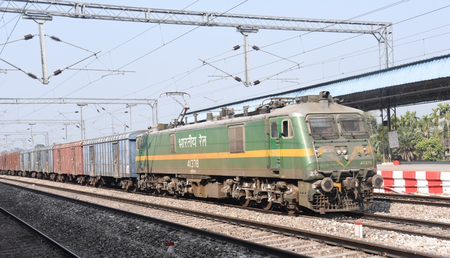
The Dedicated Freight Corridor is designed to carry heavy and long freight trains at higher speeds using advanced infrastructure and modern operating systems.
The record-breaking performance highlights the growing capacity of the DFC network and its ability to manage high-density freight traffic smoothly and safely.
According to the ministry, better planning, improved traffic management and close coordination between stations played a key role in achieving this milestone.
This improved efficiency is also benefiting passenger services. With more freight being diverted to the DFC network, congestion on conventional railway lines has reduced, helping passenger trains run more on time and improving daily travel experience for commuters.
Industries are also gaining from faster movement of goods, which supports economic growth and helps bring down overall logistics costs.
The strong performance was supported by modern technology, including real-time traffic monitoring, automated signalling systems, digital control rooms and advanced train scheduling tools.
High-power locomotives capable of hauling longer and heavier trains ensured higher average speeds, while coordinated efforts by loco pilots, assistant loco pilots and train managers helped maintain safety and discipline throughout operations.
Efficient yard management and strengthened feeder routes further reduced delays, allowing freight trains to enter and exit the network quickly.
Centralised monitoring by control centres ensured smooth coordination across different zones and stations, even on heavily loaded sections of the corridor.
–IANS
pk