




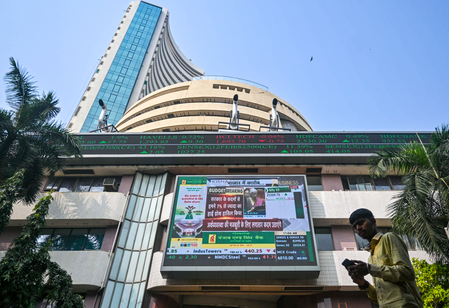
Mumbai, April 5 (IANS) The Indian stock markets appear to be transitioning into a consolidation phase with high volatility and low visibility, according to analysts.
Global developments continued to dictate market direction, particularly the evolving US-Iran conflict, which kept crude oil prices volatile and elevated.
This, in turn, raised concerns over inflation and fiscal stability for import-dependent economies like India.
“While domestic flows and technical supports are providing stability, global factors such as crude oil prices and geopolitical developments will continue to dictate direction. A cautious, selective approach with focus on risk management remains prudent in the near term,” said Hariprasad K, SEBI-registered Research Analyst and Founder, Livelong Wealth.
Nifty and Sensex settled lower at 22,713.10 and 73,319.55, respectively, on the last trading day.
Persistent FII outflows, despite a temporary recovery in the rupee against the US dollar following RBI measures to curb speculative activity, further weighed on markets and kept investor sentiment cautious despite intermittent recoveries, said Ajit Mishra – SVP, Research, Religare Broking Ltd.
Sectoral trends were mixed during the week. IT and metal stocks led the mid-week recovery, supported by selective buying and improved global cues. However, pharma, financials, and banking stocks witnessed declines, keeping overall market sentiment fragile.
Given the prevailing macro uncertainty, elevated crude oil prices, and persistent FII outflows, investors should maintain a cautious and selective approach, said analysts.
Portfolio allocation should remain tilted toward fundamentally strong large-cap stocks with better earnings visibility and robust balance sheets. Sectorally, selective opportunities may emerge in metals, energy, and select IT stocks, while caution is warranted in rate-sensitive sectors amid inflationary concerns.
Traders should remain agile, avoid aggressive leverage, and adhere to disciplined risk management practices, said Mishra.
From a technical standpoint, the structure remains fragile but not decisively bearish. The 22,500 level continues to act as immediate support, while the 22,000–22,100 zone has now reinforced itself as a critical demand area, according to market watchers.
On the upside, 22,900 remains an important resistance, followed by the psychological 23,000 mark where heavy call-based positioning indicates supply pressure. Unless the index sustains above this zone, the broader trend is likely to remain “sell on rise” in the near term.
On the commodities front, gold remains well bid, supported by safe-haven demand amid geopolitical uncertainty, while crude oil continues to trade with a strong upward bias due to supply concerns.
—IANS
na/