



Ulaanbaatar/New Delhi, June 27 (IANS) India’s growing engagement with East Asia across several areas, including technology, trade, supply chain resilience, and soft power, offers fresh opportunities for Mongolia’s landlocked economy. The two countries’ shared non-bloc approach complements their respective economic and growth strategies, a report has stated.
External Affairs Minister (EAM) S Jaishankar recently concluded his East Asia tour, which included a visit to Mongolia, underscoring the growing strategic partnership between the two countries. The visit highlighted expanding economic engagement and a shared political commitment to deepen cooperation, reinforcing connectivity between Eurasia and the Indo-Pacific, according to a report in international online magazine ‘The Diplomat.’
EAM’s June 22-23 official visit to Mongolia was part of the 10-year strategic roadmap built in 2025 during Mongolian President Khurelsukh Ukhnaa’s State Visit to New Delhi.
In his press statement, EAM Jaishankar described Mongolia and India as “strategic partners” and “spiritual siblings.”
According to the report, the strategic priorities of Prime Minister Narendra Modi’s government — spanning from digital and physical connectivity to defence partnerships, economic integration, and cultural diplomacy — closely align with Mongolia’s economic and development goals, reinforcing India’s role as a key third-neighbour partner.
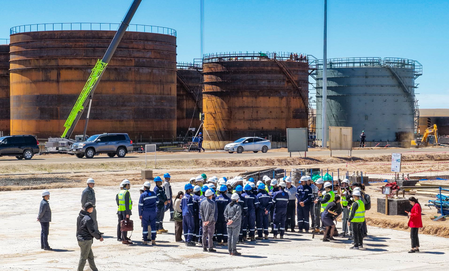
During his visit on June 22, EAM Jaishankar toured the flagship Mongol Oil Refinery project in Dornogovi Province. India is constructing Mongolia’s first-ever greenfield oil refinery under a USD 1.7 billion line of credit. Once operational, the refinery is expected to become the country’s second-largest foreign investment project after Rio Tinto’s Oyu Tolgoi mine, with the potential to transform Mongolia’s energy sector.
“Importantly, the oil refinery is one of the largest investments being financed by Mongolia’s third neighbours outside of the mining sector. The successful completion and operation of the refinery will serve as a major source of diversification for Mongolia’s limited market. Hence, the completion of the project is highly anticipated by both Mongolia and India,” the report detailed.
“However, mining remains an important focus of Mongolia’s economic strategy — and India is also a possible third destination for Mongolia’s coking coal industry. Given India’s increasing need for coal for its technological advancement and steel industry, Jaishankar expressed interest in exploring logistical opportunities for Mongolia to export coking coal and other mining products to India,” it added.
Beyond economic engagement, the report said, India and Mongolia have increasingly relied on soft power to shape their international and regional outreach. Cultural diplomacy, shared religious heritage, and educational cooperation have emerged as the cornerstones of their bilateral relationship.
Highlighting the importance of EAM Jaishankar’s recent visit, the Foreign Ministry of Mongolia said, “This visit is of great significance in strengthening the ‘Strategic Partnership’ between the two countries, enriching trade and economic cooperation with new ideas and links, and determining the direction of future cooperation.”
With Mongolia seeking investment from its third neighbours, India is expected to play a key role as a significant partner. Likewise, Mongolia has become an important pillar of New Delhi’s Act East Policy, the report noted.
–IANS
scor/ksk/as