




New Delhi, April 16 (IANS) India’s renewable energy expansion is increasingly being seen as a template for balancing energy security and transition amid global disruptions, with comparisons emerging with regions such as New York that are facing challenges in executing clean energy plans, according to a report.
According to a report in the New York Post, the ongoing crisis around key global energy routes such as the Strait of Hormuz has exposed vulnerabilities in fossil fuel-dependent systems, prompting a renewed focus on diversified and resilient energy strategies.
In this context, India’s approach of combining renewable capacity expansion with conventional energy sources — often described as an “all-of-the-above” strategy — is gaining attention for its ability to ensure both energy security and transition, it said.
India has already crossed a key milestone, with over 50 per cent of its installed electricity capacity now coming from non-fossil fuel sources, ahead of its 2030 target. While actual power generation still relies significantly on conventional fuels, the pace of capacity addition has been among the fastest globally.
Moreover, large-scale renewable projects are contributing to this transition.
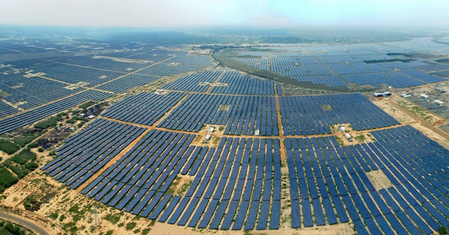
The upcoming Khavda Renewable Energy Park in Gujarat — primarily being developed by Adani Green Energy Limited (AGEL) — combines solar, wind and battery storage, and is expected to be among the largest in the world, with a planned capacity of 30 GW.
The project reflects a broader strategy of integrating multiple renewable sources to ensure a round-the-clock power supply, addressing intermittency challenges associated with solar and wind energy, the report noted.
Another key feature of India’s energy transition has been the active participation of the private sector, with companies playing a major role in executing large-scale projects under a policy framework set by the government.
This collaborative approach, along with relatively faster project execution and streamlined approvals in key segments, has enabled India to scale up renewable infrastructure at a rapid pace.
Globally, several advanced economies have faced challenges in meeting clean energy targets due to regulatory hurdles, supply chain constraints and delays in project execution, even as they continue to set ambitious climate goals.
New York has faced delays in renewable energy rollout due to regulatory hurdles, permitting challenges and infrastructure bottlenecks, even as it pursues ambitious climate targets.
Recent commentary in the US has pointed to growing challenges in executing New York’s clean energy transition plans. Governor Kathy Hochul has also acknowledged the need to reassess aspects of the state’s energy strategy amid rising costs and implementation constraints.
The comparison has gained attention amid global energy disruptions, with experts highlighting execution, policy flexibility and public-private coordination as key differentiators.
In contrast, India’s focus on execution, infrastructure development and diversified energy sourcing is seen as helping it navigate current global uncertainties more effectively.
–IANS
ag/vd