



New Delhi, March 31 (IANS) Abdulnasser Alshaali, Ambassador of the United Arab Emirates (UAE) to India, has commended New Delhi’s role in the ongoing West Asia crisis, emphasising that India’s deep regional engagement and constructive diplomatic tradition gives considerable weight to its voice.
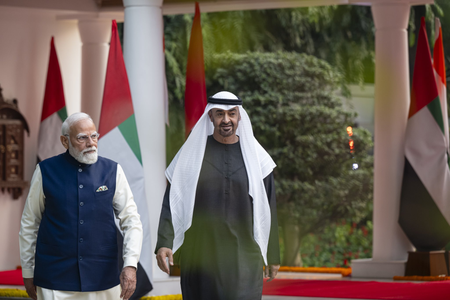
The Ambassador noted that Prime Minister Narendra Modi’s telephonic conversation with the UAE President Sheikh Mohamed bin Zayed Al Nahyan was viewed as a gesture of solidarity and reflected the close ties both leaders have built over more than a decade.
Speaking exclusively to IANS, Alshaali said, “India’s role in this crisis has already been greatly appreciated. Prime Minister Narendra Modi was among the first world leaders to telephone His Highness Sheikh Mohamed bin Zayed Al Nahyan, UAE president, after the attacks began. That call was received as an act of brotherhood and a reflection of the personal bond between two leaders who have built this partnership together for over more than a decade.
“India then put its name to UN Security Council Resolution 2817, co-sponsoring the text alongside 135 nations. The resolution sends a powerful message that the international community will not tolerate attacks on state sovereignty or the deliberate targetting of civilians and critical infrastructure. India is a major power with deep ties across the West Asian region, and its voice carries weight through the credibility of its strong and constructive diplomatic tradition,” he added.
When asked how he views the rising tensions in the Gulf amid the Iran-Israel war, Alshaali said that, since February 28, Iran has subjected the UAE and its neighbours to a sustained campaign of “terrorist aggression”.
As of 29 March, he revealed, 414 ballistic missiles, 15 cruise missiles, and 1,914 drones have targetted the UAE — more than all other countries combined.
“What is particularly troubling is that these attacks have not been directed at states engaged in conflict with Iran, but at its neighbours, including countries that have worked consistently to avoid escalation,” he told IANS.
Responding to another question on whether the UAE will retaliate if Iranian attacks continue, the envoy said that the country has exercised “deliberate, calibrated, and strategic restraint” throughout the crisis.
He added that the UAE retains its full and legitimate right under the UN Charter to deter aggression and defend its sovereignty and will take all necessary measures to safeguard its territory while ensuring the safety of its citizens and residents.
“Iran has deliberately launched missiles and drones toward civilian infrastructure, including residential buildings, airports, and other civilian facilities. These attacks have caused loss of life and injuries, which is entirely unacceptable and unlawful. At the same time, the UAE Armed Forces have demonstrated exceptional operational readiness, successfully defending the country’s airspace and territory with professionalism and precision,” Alshaali stated.
He stressed that despite the “flagrant aggression”, the situation in the UAE remains stable and under control, with national institutions operating at the highest level of readiness, critical sectors functioning without disruption, and daily life continuing as normal.
The UAE envoy further asserted that the safety of citizens, residents, and visitors remains a top priority for the UAE that cannot be compromised.
“At the same time, our approach is, and has always been, toward diplomacy. However, diplomacy requires reciprocity. Iran cannot launch missiles at gas and oil fields and civilian infrastructure while simultaneously claiming to seek peace. The UAE’s sovereignty, its territorial integrity, and the safety of everyone on its soil are non-negotiable,” Alshaali noted.
–IANS
scor/as