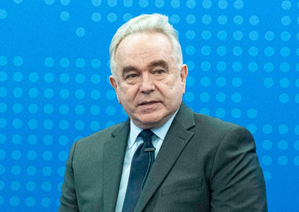
Washington, March 20 (IANS) The ongoing conflict in Iran is beginning to unsettle US strategic commitments in the Indo-Pacific, as Washington diverts military assets and leadership attention back to the Middle East, a former senior Biden administration official said on Friday.
“One of the major bipartisan pursuits within the US government over the last two decades has been to redirect military, diplomatic, commercial, and strategic pursuits away from the Middle East and towards the dominant theatre of the 21st century: the Indo-Pacific,” said Kurt Campbell, former US Deputy Secretary of State and one of Washington’s leading Indo-Pacific strategists.
That strategic consensus, built across administrations, reflected a growing belief that the US had “overinvested in quixotic campaigns in Iraq and Afghanistan rather than focusing on the consequential challenges and opportunities ahead in Asia”.
Successive administrations — under Barack Obama, Donald Trump, and Joe Biden — had sought to embed this shift into policy.
The effort included reallocating military resources, strengthening alliances, and prioritising Asia in key strategic documents.
The rationale was clear. Policymakers cited “the rise of China, the importance of US strategic allies and partners, the drama of technological innovation, and the military modernisation campaigns of virtually every country” as forces demanding sustained American engagement in the Indo-Pacific.
However, the decision to join Israel in striking Iran has disrupted that trajectory, Campbell said in a policy note released on Friday.
“In one fell swoop… President Trump — perhaps inadvertently — has sent every element of this trend into reverse,” the note added.
The immediate impact has been on leadership bandwidth.
“The ongoing operations in and around the Gulf are demanding the time and attention of the senior-most leaders in government,” it said, adding that such attention “surpasses even limited munitions as the scarcest and most important element of American global engagement”.
Military redeployments have compounded the shift.
“Military capabilities that had been patiently accumulated in Asia, including an aircraft carrier, anti-ballistic missile systems, and a rapid reaction Marine Expeditionary Unit, have been vacated overnight” to support operations in the Gulf, Campbell said.
Diplomatic initiatives have also been affected.
Engagements central to Indo-Pacific strategy — including “a planned summit with China’s leader Xi Jinping” and outreach to allies such as Japan — have been postponed or redirected due to the conflict.
Some officials maintain that the shift is temporary.
“Some senior administration officials assure us that these moves are merely short-term,” the note said, adding that they expect “essential elements of high-level attention and strategic deterrence” to return to the western Pacific.
But the warning draws on past experience.
“Once drawn into the quagmire of an ill-defined conflict, American strategists have had difficulty extracting themselves from the morass,” Campbell added.
The situation, he added, “bears sharp resemblance to previous experiences of regional preoccupation and over-commitment”, raising concerns that the US could again become deeply entangled in the Middle East at the expense of broader strategic goals.
Such a shift is likely to reverberate across Asia.
“Such an abrupt departure from US strategic purpose in the Indo-Pacific will, no doubt, trouble our closest partners in Asia,” the note said, while also potentially encouraging Beijing to become “ever more confident about China’s own prospects in the region and beyond”.
–IANS
int/lkj/khz