



Vientiane, May 27 (IANS) The Lao government held a meeting to discuss key national issues and measures to ease the rising cost of living and mitigate its impact on people’s livelihoods and socio-economic development, as growing regional and global uncertainties continue to affect Laos.
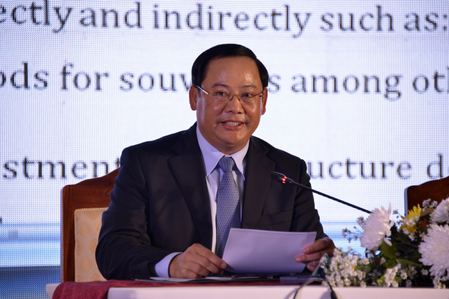
The government’s monthly meeting for May opened on Wednesday in Vientiane, bringing together senior officials to review key developments and set priority tasks for the coming month, Lao News Agency reported.
The meeting took place amid ongoing regional and global uncertainties, which continue to affect the global economy and have impacted Laos through rising commodity and transportation costs. The government stressed the need for timely and effective measures to reduce the impact on people’s livelihoods and socio-economic development.
During the session, participants discussed several key issues, including national defense and security, unexploded ordnance clearance, education system reforms, and preparations for upcoming conferences and other important national events, Xinhua News Agency reported.
In his remarks, Lao Prime Minister Sonexay Siphandone called on participants to provide practical, focused and solution-oriented recommendations to ensure the meeting’s outcomes can be implemented effectively.
Meanwhile, Laos recorded an inflation rate of 9 per cent in May, a slight decrease from 10.2 per cent in April, according to a report released by the Lao Statistics Bureau on Wednesday.
The slower rise in inflation was mainly attributed to lower domestic fuel prices and a stable exchange rate, it said.
The highest price rise was recorded in the goods and services category, which stood at 28 per cent. Other categories driving inflation included the housing, water, electricity and gas category at 20.4 per cent, and the communications and transport category at 15.5 per cent.
On May 19, the Lao Ministry of Finance has reaffirmed its commitment to strengthening public finance management, improving debt management, and promoting sustainable economic development to maintain economic stability.
According to the ministry’s report released on May 19, senior officials met to review progress in fiscal reforms and measures aimed at improving public finance management.
The officials also reviewed developments in key sectors under the ministry’s supervision, including revenue collection, expenditure management, international cooperation, modernisation, statistics, and other related areas.
The ministry outlined a series of priorities and measures aimed at strengthening fiscal management. On revenue collection, authorities called for stronger efforts to ensure state revenue meets annual targets by expanding new revenue sources, including land and environmental taxes, accelerating modernisation, and promoting wider use of electronic invoicing systems.
Regarding expenditure management, officials emphasised the need to improve approval and budget disbursement procedures through modern systems to enhance transparency, efficiency, and cost-effectiveness.
Relevant sectors were also urged to take greater responsibility for assessing and restructuring public debt while limiting high-interest and inefficient borrowing.
On human resource development, the ministry highlighted the importance of building a capable workforce with strong qualifications and practical expertise.
Officials further underscored the importance of implementing the Politburo’s resolution on building an independent and self-reliant economy capable of supporting sustainable development.
The ministry also called on officials at all levels to strengthen political responsibility and actively implement reforms aimed at modernizing public finance management while promoting strong, green, and sustainable socio-economic development.
–IANS
akl/