




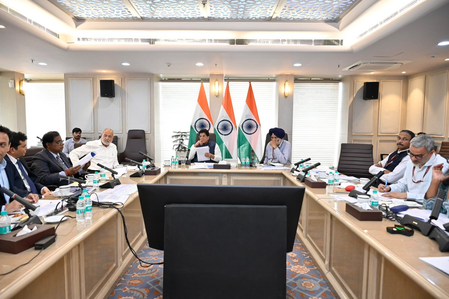
New Delhi, June 10 (IANS) Commerce and Industry Minister Piyush Goyal on Wednesday held a review meeting with the officials from ONDC and Nirmit Bharat here.
The discussions focused on leveraging open digital networks to transform retail and distribution ecosystems, bring small producers and artisans onto digital platforms, strengthen logistics and mobility services through innovative digital solutions.
“Emphasised how these efforts have the potential to deepen market access, improve service delivery and drive broad-based economic participation,” Goyal posted on X.
Nirmit Bharat is a non-profit subsidiary of the government-backed Open Network for Digital Commerce (ONDC).
Earlier this month, ride-hailing platform Uber announced a strategic investment in ONDC, which is one of the earliest investments by a global technology company in India’s open digital commerce network.
The company said the investment deepens its commitment to India’s Digital Public Infrastructure (DPI) ecosystem and reflects its long-term strategy of building mobility and logistics services through open and interoperable networks.
The investment builds on Uber’s existing partnership with ONDC and follows the company’s earlier integration with the network.
Adil Zainulbhai, Independent Director at ONDC, said the investment reflects growing confidence in India’s digital commerce infrastructure and its ability to create a level playing field for businesses.
Earlier, Zoho Corporation announced an investment of Rs 70 crore in ONDC to support the development of sovereign technology and strengthen India’s digital public infrastructure.
The Chennai-headquartered global technology company said the investment is aimed at making technology more accessible and inclusive for businesses of all sizes, particularly micro, small and medium enterprises (MSMEs).
ONDC enabled 218 million transactions during FY2025-26 as it continued expanding its network across sectors including retail, logistics, mobility and financial services.
ONDC is building open digital commerce rails aimed at enabling interoperability, inclusivity and efficiency across sectors, while addressing structural challenges such as fragmented systems, high entry barriers and trust deficits in digital commerce.
—IANS
na/