



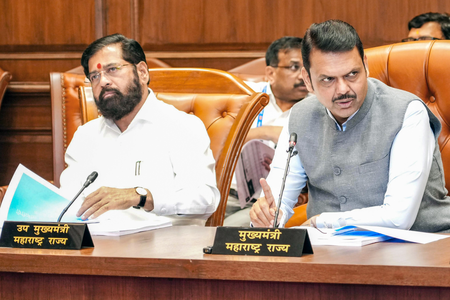
Mumbai, June 16 (IANS) In a major boon for cancer patients across Central India, the Maharashtra cabinet, chaired by Chief Minister Devendra Fadnavis, on Tuesday approved the setting up of a High-Energy Medical Cyclotron Project (HEMCP) in Nagpur with an estimated budget of Rs 300 crore.
The project will develop Nagpur into a Radiopharmaceutical Innovation Hub, reducing the region’s reliance on major medical hubs like Mumbai and Hyderabad. It will ensure the local availability of crucial radioisotopes required for PET-CT and Nuclear Medicine services.
The project will be funded on a 50:50 cost-sharing basis between the Medical Education Department and the Industry Department. The Medical Education Department will immediately allocate Rs 150 crore. A 30-hectare land parcel at Bhansoli (Kinhi) in Hingna taluka has been approved for the project.
Nagpur’s central geographical location makes it an ideal hub. It will cater to patients within a 500-kilometre radius spanning Maharashtra, Madhya Pradesh, Chhattisgarh, Telangana and Andhra Pradesh, leveraging the existing network of AIIMS, National Cancer Institute (NCI) and the Government Medical College (GMC), said the government release.
The project will be executed through the ‘Mahacare’ company via a dedicated Special Purpose Vehicle (SPV) under the Companies Act, 2013. Until the SPV is finalised, a steering committee, chaired by Shrikar Pardeshi (Principal Secretary to the CM), will oversee operations.
Further, the State cabinet approved the Maharashtra Rural Drinking Water Policy 2026 to ensure a sustainable, clean, and permanent drinking water supply to rural households, in alignment with the Viksit Maharashtra 2047 vision.
The policy creates a comprehensive master plan for the operations and maintenance (O&M) of water schemes under Jal Jeevan Mission 2.0. A central corpus fund will be created at the Gram Panchayat, Zilla Parishad and Maharashtra Jeevan Pradhikaran (MJP) levels.
The State will deploy SCADA systems for multi-village water schemes, expand digital platforms for real-time tracking of water assets and set up a GIS-based dashboard for grievance redressal. It also heavily emphasises rainwater harvesting, greywater recycling, and preventing water theft.
To make the schemes self-sustaining, monthly water tariff rates per household have been capped at a minimum of Rs 150 and a maximum of Rs 400. If water tax collections fall short, Gram Panchayats are authorised to utilise funds from the 15th and 16th Finance Commissions to bridge the gap.
Priority for water billing, collection and regular maintenance contracts will be given to local Women Self-Help Groups (SHGs) and Primary Agricultural Credit Societies (PACS). A three-tier Grievance Redressal Cell will be formed, backed by the Nal Jal Seva mobile application and Nal Jal Mitras, the release said.
–IANS
sj/dan