



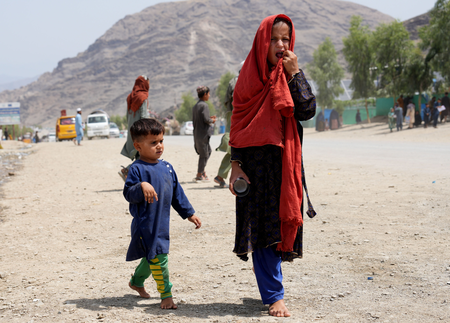
Kabul, Sep 25 (IANS) Pakistan’s actions have imposed a heavy human toll on Afghan civilians, with millions of refugees displaced, tens of thousands detained, students facing expulsion, journalists at risk of forced return, and hundreds killed in military operations, a report has stated.
It noted that these developments point to a humanitarian crisis extending far beyond the immediate security dispute between Islamabad and Kabul.
“A refugee is not a militant because of nationality. A medical student is not responsible for relations between Kabul and Islamabad. A journalist seeking protection is not a security threat merely because he or she is Afghan. And civilians inside Afghanistan do not lose their protected status because armed groups may operate elsewhere in the country. National security is tested not only by the threats a state confronts, but also by the lines it refuses to cross while confronting them,” a report in Afghanistan’s leading news agency, Khaama Press, detailed.
According to the report, Pakistan has increasingly justified its confrontation with Afghanistan in the name of national security, terrorism and self-defence, accusing the Taliban authorities of providing space for the Tehreek-e-Taliban Pakistan (TTP) and other militant groups on Afghan territory. Kabul, however, has repeatedly denied the allegations.
But beyond the rhetoric of security and counterterrorism, it said, the ordinary Afghans, including refugees, children, students, journalists, patients, traders and families, have repeatedly borne the consequences.
“The pattern extends far beyond the battlefield. It runs from homes searched in Pakistani cities to families separated during deportation; from Afghan students ordered out of universities to journalists facing return to the Taliban government they fled; from border restrictions disrupting livelihoods to Pakistani military operations that have caused significant civilian casualties inside Afghanistan,” the report mentioned.
Pakistan’s Medical and Dental Council on September 1 directed Afghan students already pursuing medical and dental studies to return to Afghanistan, while closing the door to new Afghan admissions for the ongoing academic session.
According to the Human Rights Commission of Pakistan, about 100 Afghan students in Lahore could be impacted, among them an estimated 20 to 40 women, Khaama Press noted.
“For Afghan women, the consequences are particularly severe. Taliban restrictions have effectively shut women out of universities and medical education inside Afghanistan. Returning a female medical student is therefore not simply a change of country; for many, it could mean the end of their education altogether,” it added.
Highlighting the growing insecurity faced by Afghan journalists, the report cited global press freedom group The Committee to Protect Journalists, which documented Afghan reporters being detained in Islamabad despite holding valid Pakistani visas and passports.
Another group, Reporters Without Borders, highlighted that as many as 50 Afghan journalists have been forcibly returned from Pakistan to Afghanistan since Pakistan launched its mass deportation policy.
“Many of those journalists originally fled Afghanistan because of threats and repression under Taliban rule. The result is a grim paradox: people who escaped Afghanistan because journalism placed them in danger have found themselves at risk of being sent back into that same danger,” the report stated.
–IANS
scor/as