



Kathmandu, Feb 3 (IANS) Nepal’s interim government on Tuesday decided to withdraw the Social Media Bill registered in Parliament by the then K P Sharma Oli–led government, which had been widely criticised for seeking to curtail freedom of expression.
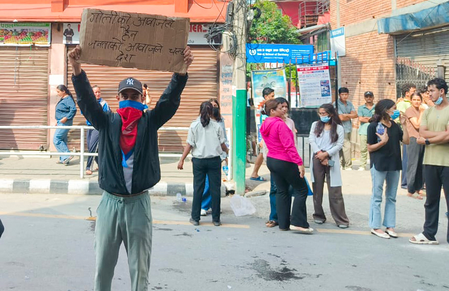
The decision comes amid memories of the Gen Z–led protests against the ban on social media imposed by the Oli administration in September last year. Those protests eventually escalated into broader anti-corruption demonstrations, leading to the downfall of the seemingly strong Oli-led government.
Government spokesperson and Home Minister Om Prakash Aryal told journalists that a Cabinet meeting had decided to withdraw the Social Media Bill from Parliament.
The bill aimed to regulate social media platforms, arguing that the existing framework under the Directives for Managing the Use of Social Networks, 2023 was insufficient.
In early September, the Oli-led government had banned several social media platforms — including Meta (Facebook, Instagram, WhatsApp), Alphabet (YouTube), X (formerly Twitter), Reddit, and LinkedIn — citing their failure to register with the Nepali government in accordance with regulatory provisions.
The move, however, triggered strong backlash from Gen-Z protesters, which later evolved into wider anti-corruption protests and ultimately resulted in the removal of the Oli-led government. Despite this, the bill introduced by the Oli administration remained pending in the upper house of Parliament, containing several provisions that stakeholders feared could restrict freedom of expression.
The Federation of Nepalese Journalists, the umbrella organisation of Nepali journalists, along with digital rights groups, had criticised several provisions of the bill.
Among the most contentious clauses was the provision on penalties for the misuse of social media. The bill listed around a dozen offences that could make users liable to hefty fines and imprisonment.
Those who transmit false or misleading information using fake identities would face the harshest penalties, including imprisonment of up to five years and fines of up to NPR 1.5 million.
“No person shall, individually or collectively, create or operate on a platform any pseudonymous, permanent or temporary group, page, or any other type of ID to disseminate false or misleading information in a manner that undermines Nepal’s sovereignty, territorial integrity, or is contrary to the national interest,” one section of the bill states.
The bill also stipulated that social media platforms could operate only after obtaining a licence from government authorities. Platforms operating without a licence would be subject to a penalty of NPR 2.5 million.
It also proposed severe penalties for offences such as cyberbullying, skimming, phishing, imposter scams, sextortion, and extortion carried out through social media, among others.
–IANS
scor/as