



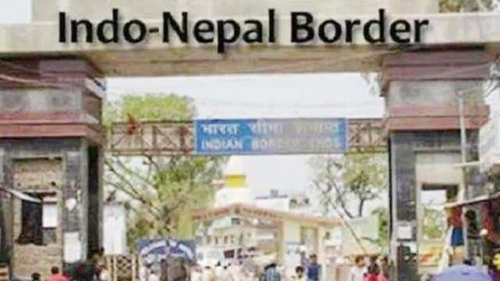
Kathmandu, April 18 (IANS) The Nepal government’s decision to levy customs duty on goods valued above NPR 100 brought from bordering Indian towns has drawn criticism from stakeholders in Nepal’s border areas, where nearby Indian markets have long served as a source of affordable goods.
The government has strictly enforced the rule requiring customs duties on goods exceeding NPR 100 over the past few days. Although the provision was introduced several years ago, it had not been implemented due to practical difficulties faced by residents of border regions. The newly elected government’s decision to enforce the rule has now sparked backlash from local stakeholders.
The Nepal-India Open Border Interaction Group, a civil society organisation, on Saturday urged the government to immediately revise its customs policy, warning that the current provisions are placing undue hardship on people living in border areas.
In a statement issued on Saturday, the group highlighted the centuries-old social, cultural, and economic ties between Nepal and India, calling on authorities to adopt practical and people-friendly measures to ease cross-border movement and strengthen grassroots relations.
A key demand put forward by the group is the immediate repeal of the provision requiring customs duties on goods exceeding NPR 100 brought through border points. It argued that the rule disproportionately affects low-income households in border regions and is impractical to enforce. Instead, the group called for zero customs duty on goods meant for household use.
Additionally, the group called for the establishment of well-managed and affordable markets in border areas to improve access to essential goods. It also proposed introducing special customs-free facilities for religious and cultural visits, allowing devotees traveling to border towns and major religious sites in both countries to carry goods duty-free for up to 48 hours. The group said this would promote religious tourism and deepen people-to-people ties.
Department of Customs Director Kishor Bartaula told IANS that the rule was enforced to control smuggling. “Smugglers use ordinary people to bring goods from Indian markets in small quantities multiple times a day without paying duty, and then collect them in large volumes for sale,” he said. “Otherwise, charging duty on goods priced over NPR 100 does not contribute significantly to government revenue.”
He added that stricter enforcement of the rule is also expected to benefit traders in Nepal’s border towns.
–IANS
scor/as