



Kathmandu, Oct 25 (IANS) The Nepali government plans to expand flood early warning systems across six major river basins and lower water levels in four high-risk glacial lakes following devastating floods on August 26.
The initiatives are part of efforts to strengthen disaster preparedness amid growing climate-related risks in the Himalayan region.
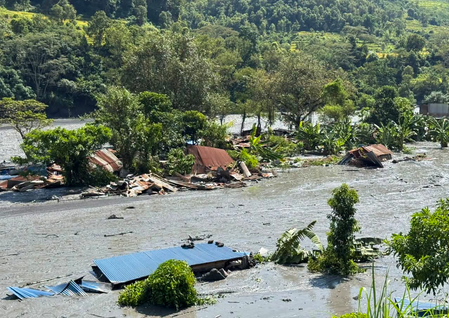
The recent floods claimed around 1,500 lives, while more than 5,000 people remain missing. They also caused damage to physical assets worth $1.81 billion, according to the Nepali government’s preliminary Rapid Damage and Needs Assessment (RDNA).
The floods in the Bhotekoshi and Trishuli river basins caused extensive damage to hydropower projects, solar energy facilities, electricity transmission infrastructure and transport networks, with the energy sector, particularly hydropower projects, among the hardest hit.
According to a government white paper, the centre will install flood early warning systems across six river basins under the Priority River Basin Flood Risk Management Project, which runs from 2022 to 2028, with an investment of $7.54 million.
The six river basins covered by the project are Mawa-Ratuwa, Bakraha, Lakhandehi, East Rapti, West Rapti and Mohana-Khutiya.
The centre will also provide round-the-clock flood forecasting and early warning services from mid-May to mid-October, covering the country’s main monsoon season, according to the white paper.
In recent years, rising temperatures have accelerated glacier melting in the Himalayas, raising concerns about glacial lake instability, avalanches and potentially destructive downstream floods.
The Nepali government also plans to implement the Glacial Lake Outburst Flood (GLOF) Sanjeevani Project, which aims to lower water levels in four high-risk glacial lakes: Thulagi in Manang district, Lower Barun in Sankhuwasabha district, and Lumding Tsho and Hongu-2 in Solukhumbu district.
The project is scheduled to run from 2026 to 2033, with an estimated budget of $49.9 million.
Nepal has previously lowered water levels in Tsho Rolpa in Dolakha district and Imja Lake in Solukhumbu district to mitigate the risk of glacial lake outburst floods.
Likewise, the Department of Hydrology and Meteorology, another government agency, plans to prioritise artificial intelligence, machine learning and high-performance computing systems to improve the accuracy and reliability of forecasts.
–IANS
scor/ksk/khz