



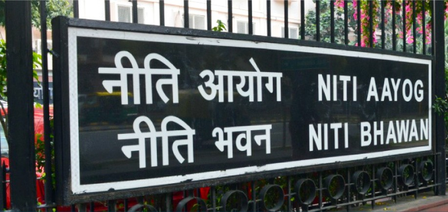
New Delhi, Nov 4 (IANS) NITI Aayog and Germany’s GIZ GmbH have signed an implementation agreement to accelerate road freight decorbonisation, thus contributing to India’s broader efforts to achieve its ‘Nationally Determined Contribution’ targets and long-term climate goals, an official statement said on Wednesday.
Decarbonising road freight is an important component of India’s transition towards a sustainable, energy-efficient and low-carbon transport system.
However, the electrification of medium and heavy-duty freight vehicles remains at an early stage, highlighting the need for adequate charging infrastructure, innovative financing mechanisms, and an enabling regulatory framework.
“The Agreement formalises the collaboration between the project partners for accelerating the decarbonisation of India’s road freight sector,” said an official statement.
The Nationally Determined Contribution–Transport Initiative for Asia Phase II (NDC-TIA II) is a regional initiative supported by the German government’s International Climate Initiative (IKI).
World Resources Institute (WRI) India, International Council on Clean Transportation (ICCT) India and Agora Energiewende are among the initiative’s implementing partners.
India’s infrastructure planning has, in recent years, transitioned from individual projects into a more integrated people-centric approach aimed at better connectivity, ease of living and higher economic growth under the PM Gati Shakti model.
National highways have expanded substantially, and new expressways, ports and metro systems have transformed the country’s connectivity landscape.
Previously, infrastructure creation was approached in a piecemeal manner, with a ministry, department or agency responsible for individual projects. Citizens or businesses, however, do not experience infrastructure along departmental lines.
Meanwhile, NITI Aayog on Tuesday launched the “India S&T Scoreboard” as an interactive platform that provides an integrated view of the science & technology landscape of states and UTs, bringing together data on the science and technology ecosystem, including higher education institutions, R&D institutions, deep tech startups, and incubators, along with S&T outputs like research publications and patents.
NITI Aayog Vice Chairman Ashok Kumar Lahiri emphasised that India’s further progress in science and technology requires a more active role by the states. He noted that the Scoreboard will help states identify their strengths and gaps, learn from one another, and design better programmes and policies in science and technology. He urged all states and UTs to make full use of the platform.
–IANS
na/