




New Delhi, Jan 16 (IANS) The BJP on Friday rejected allegations made by Oscar-winning composer A.R. Rahman that work opportunities in the Hindi film industry have slowed for him in recent years due to shifting power dynamics and, possibly, what he described as a ‘communal thing.’
Reacting to Rahman’s remarks, BJP leaders and ministers said there was no truth to his claims and maintained that the film industry continues to function on the basis of talent and merit, not religion.
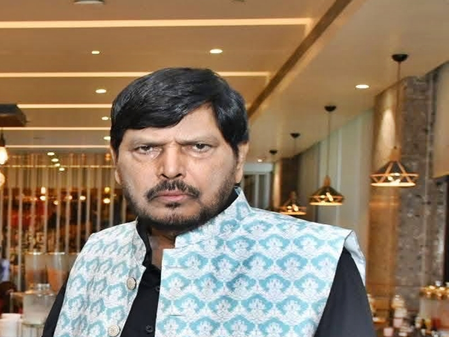
Union Minister Ramdas Athawale said he disagreed with Rahman’s allegations, pointing out that several prominent Muslim artists continue to enjoy widespread success and admiration across the country.
“I believe there is no truth to A.R. Rahman’s allegations. The Hindi film industry has many artists from the Muslim community, including Salman Khan, Shah Rukh Khan, and Aamir Khan, who are loved by people in Maharashtra and across India,” Athawale told IANS.
BJP MLA Jitendra Kumar Gothwal said that the functioning of the film industry has become more transparent in recent years.
“Although this issue pertains to the film industry, I feel that under the present circumstances, transparent work is being carried out. Earlier, people often got work through recommendations from certain leaders. Now, work is being given on the basis of talent rather than manipulation,” he said.
He further added that Rahman may be uncomfortable with these changes.
The BJP Minority Morcha president, Syed Bhasha also dismissed Rahman’s claims, saying they were factually incorrect.
“A.R. Rahman reportedly said he hasn’t received opportunities under the BJP government, but that is not true. Since 1992, he has delivered major hits such as Slumdog Millionaire and Madras Cafe, and has earned awards, including the 2025 National Award for Best Music, purely on merit,” he said.
He further noted that opportunities in the film industry depend on the success of projects and audience response, not the ruling party.
“Rahman’s talent is unquestionable, and as long as he continues to create great music, recognition will follow,” he added.
Meanwhile, leaders from Opposition parties expressed concern over Rahman’s remarks and called for serious reflection on the issue.
AIMIM leader Waris Pathan said he would comment only after fully understanding Rahman’s statement.
“I have not heard exactly what he said. Once I listen to his exact words and understand the context in which he said them and why he said them, only then will I be able to give a proper response,” Pathan said.
Congress leader Husain Dalwai termed the issue unfortunate and deeply concerning.
“A.R. Rahman is a great musician and an Oscar winner who is known all over the world. If he is facing difficulties because he is a Muslim, then it is very sad and wrong. Sidelining someone of his stature is a loss not only for the film industry but for the country,” Dalwai said.
Congress MP Tariq Anwar also urged the government to take note of the matter.
“If he is saying this, it is very concerning. Discrimination against artistes after achieving global recognition is unfortunate. Increasing discrimination will only create hatred among people,” he said.
Congress MP Imran Masood echoed similar sentiments, calling the issue serious.
“If an Oscar-winning artiste is saying this, it should be taken seriously. Being denied work in one’s own country because of religion is a grave concern,” he said.
Former Delhi Lieutenant Governor Najeeb Jung stated that discrimination does exist in some cases. “Yes, many Muslims do not get work because of their religion. There is no doubt about this, and it should not be hidden. That is why we are working to address and resolve this issue,” Jung said.
General Secretary of the All India Shia Personal Law Board, Maulana Yasoob Abbas, said communal discrimination should not exist in any field. “Whether it is the film industry or any other sector, no one should face communal discrimination. However, what problems Rahman Sahab is facing and the reasons behind them can be explained best by him alone,” he said.
Over the decades, Oscar-winning composer A.R. Rahman has shaped Indian cinema with some of its most unforgettable musical creations and continues to remain an influential force in the industry. In a recent interaction with BBC Asian Network, Rahman spoke candidly about how changing power structures within the Hindi film industry have impacted the volume of work he receives.
Reflecting on his early journey in Bollywood, Rahman shared that despite the success of films such as ‘Roja’, ‘Bombay’, and ‘Dil Se’, he still felt like an outsider as a Tamil composer working in a predominantly Hindi-speaking industry.
It was only after Subhash Ghai’s ‘Taal’ that he felt a deeper sense of acceptance. According to Rahman, the album transcended regional boundaries and became part of everyday life across North India. He noted that its blend of Punjabi, Hindi, and folk influences helped it resonate widely, making it difficult for many to even imagine the music as coming from a composer whose first language was Tamil.
Rahman also recalled an important moment in his professional growth when film-maker Subhash Ghai advised him to learn Hindi. Instead, Rahman chose to study Urdu, recognising it as the foundational language of Hindi film music during the 1960s and 1970s. His linguistic exploration did not stop there — he later learned Arabic due to its phonetic similarity to Urdu and eventually embraced Punjabi, inspired by his collaboration with singer Sukhwinder Singh.
When asked about experiencing bias in the Hindi film industry during the 1990s or discrimination against South Indian artistes, Rahman said he never directly felt excluded during those years.
However, he observed that the last eight years have been different. He suggested that a shift in power towards individuals lacking creative sensibilities may have influenced opportunities, adding that communal factors could also be at play, though not overtly or directly.
Rahman explained that he often hears indirectly about projects where he was initially considered but later replaced due to internal decisions by music companies.
Despite these changes, Rahman said he remains unaffected and philosophical about the situation. He emphasised that he does not actively seek work and prefers to focus on family and personal time. For him, sincerity and dedication to his craft are what ultimately bring meaningful opportunities. He believes that whatever is meant for him will come naturally, without the need for pursuit or compromise.
–IANS
jk/rad