



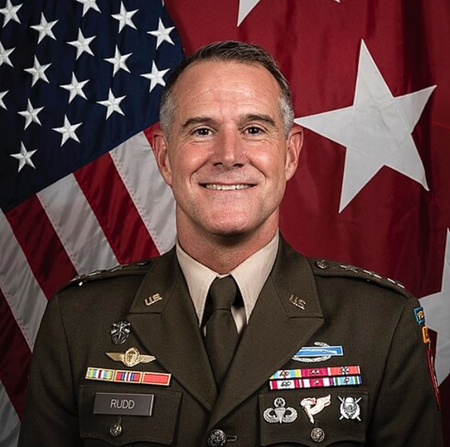
Washington, Jan 30 (IANS) Facing what he described as immediate threats to US infrastructure and democracy, NSA nominee Joshua Rudd has told senators that speed, integration, and innovation must guide American cyber defence.
Rudd, President Donald Trump’s nominee to serve as director of the National Security Agency, outlined his priorities in written responses to the Senate Select Committee on Intelligence and in an opening statement to lawmakers this week.
He said the NSA leads two core missions critical to national security: foreign signals intelligence and cybersecurity. Both missions, he said, must deliver timely intelligence while protecting the nation’s most sensitive systems.
Rudd emphasised the importance of maintaining close coordination between the NSA and US Cyber Command. The two organizations, he said, operate in a shared and inseparable environment.
He strongly defended the long-standing arrangement in which the NSA director also serves as commander of Cyber Command. Ending that structure, he warned, could slow operations and weaken alignment.
Without unified leadership, Rudd argued, intelligence priorities and cyber operations could drift apart. That, he added, could lead to inefficiencies, delayed responses and reduced transparency.
The dual role, he asserted, allows faster decision-making and clearer accountability in a rapidly changing threat environment. It also protects sensitive relationships and mission equities.
Rudd acknowledged that the arrangement should be reviewed as Cyber Command continues to mature. But he said unity of effort remains essential to defending the homeland and deterring adversaries.
On oversight and funding, Rudd said all appropriated funds must be used strictly for their intended purpose. He said clear processes exist to ensure accountability between the two organizations and pledged to enforce them.
Rudd drew on more than three decades of military service, including senior leadership roles across multiple combatant commands. He said those experiences shaped his view that intelligence and operations must be fused at speed.
He pointed in particular to his recent years in the Indo-Pacific, where he said adversarial activity has surged. Those threats, he said, are amplified by the spread of low-cost technologies.
Artificial intelligence, cyber tools and autonomous systems, Rudd said, have placed advanced capabilities in the hands of a wider range of actors.
“These threats are no longer distant,” he said, describing them as direct challenges to US infrastructure and democratic institutions.
If confirmed, Rudd said he would push for closer integration across the intelligence community. He outlined steps to improve data sharing, interoperability and interagency training.
He also highlighted the growing role of artificial intelligence in intelligence and cybersecurity. AI, he said, allows faster analysis of vast data sets and strengthens cyber defenses, while requiring strict adherence to legal and ethical standards.
Rudd identified China as the most significant national security challenge facing the NSA. He also cited cyber threats to critical infrastructure, accelerating technological change and rising global instability.
Addressing surveillance authorities, Rudd said intelligence collected under Section 702 of the Foreign Intelligence Surveillance Act has provided critical insight into foreign adversaries. He said such intelligence has saved American lives and strengthened national security.
The NSA is the United States’ premier cryptologic organization, responsible for foreign signals intelligence and the protection of national security systems under the authority of the director of national intelligence.
–IANS
lkj/rs