




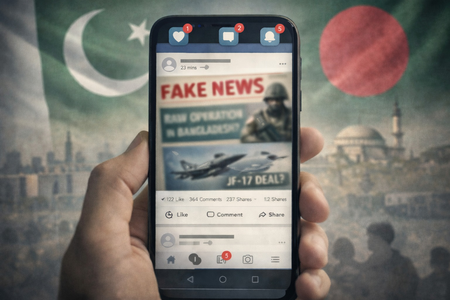
New Delhi, April 5 (IANS) Pakistan-linked disinformation networks are actively targeting Bangladesh through coordinated digital campaigns, leveraging social media platforms, artificial intelligence tools and local amplification channels to shape public narratives and geopolitical perceptions, according to a recent investigation.
The report, highlights how actors linked to Pakistan are systematically pushing narratives that portray India as a destabilising force while projecting Pakistan as a favourable strategic partner for Bangladesh.
According to the investigation, these campaigns typically originate on social media platform X and are subsequently disseminated into Bangladeshi digital ecosystems, particularly via Facebook groups and pages. Local accounts then amplify the content, lending it an appearance of organic traction and enabling it to enter mainstream discourse.
The study identifies recurring patterns in messaging, including fear-based narratives, identity-driven themes, and attempts to influence perceptions around regional security dynamics.
One of the key examples cited involves the spread of false claims regarding alleged operations by Research and Analysis Wing (RAW), which were widely circulated online and, in some instances, picked up by sections of Bangladeshi media, significantly amplifying their reach.
Another narrative highlighted in the report relates to defence cooperation. Pakistan-linked accounts promoted claims suggesting that Bangladesh was moving towards procuring JF-17 Thunder fighter jets, jointly developed with China.
The report notes that these claims lacked official confirmation from Bangladeshi authorities but were amplified in a way that created a perception of an imminent policy shift.
The investigation further finds that such campaigns often begin with speculative or limited information, which is then amplified through coordinated messaging into definitive claims. This strategy, the report suggests, is aimed at manufacturing consensus and influencing public debate on strategic and policy issues.
A significant aspect flagged in the report is the increasing use of AI-generated content, including videos, voiceovers and manipulated visuals, to enhance the credibility and virality of misleading narratives across platforms.
The report also points to an ideological layer embedded within these campaigns, including messaging around broader “Muslim unity” and calls for closer defence alignment with Pakistan, often framed in opposition to India’s regional role.
The findings come amid evolving political developments in Bangladesh and a rapidly expanding digital information ecosystem, where online platforms are playing an increasingly central role in shaping public opinion.
The report, published by The Dissent and authored by Sayed Hasan Al Manzur, underscores that such cross-border disinformation operations pose a growing challenge for South Asia, with potential implications for democratic discourse, media integrity and regional stability, calling for enhanced vigilance and coordinated countermeasures.
–IANS
sn/khz