



Quetta, April 13 (IANS) Highlighting the extent of adversity in Pakistan’s largest province, Balochistan Health Secretary Mujeebur Rehman has admitted that more than 80 per cent of the population in the region lacks access to even primary healthcare facilities.
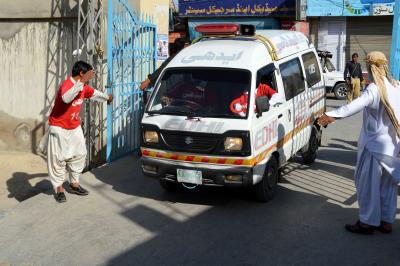
Rehman’s statement implies that less than a quarter of people in Balochistan have access to an ambulance that takes them to a hospital, a general practitioner who can diagnose their ailments or basic outpatient treatment. Several factors together contribute for the collapsing healthcare system in Balochistan, an editorial in Pakistan’s leading daily ‘The Express Tribune’ detailed.
“There are multiple factors in the province that all collude together to form a collapsing healthcare system. One of the culprits is its land mass itself. With vastly dispersed communities and an extremely low population density, the arid, mountainous region offers little respite to those attempting to optimise health infrastructure,” The Express Tribune mentioned.
Majority of top hospitals in Balochistan are located in its most populated region, Quetta, which is a full day’s drive from Turbat, the second most populated region of province. However, it is not only the geography which is to be blamed.
According to Balochistan’s Health Secretary, 15 major reforms have been introduced in the past one-and-a-half years in the healthcare sector in Balochistan.
“But it must be asked: was the implementation of the first reform ensured before moving on to the 14 others? Until there is strict accountability and capable management, the region will find itself steeped in another decade of a facade of progress and improvement,” the newspaper opined.
A media report last month highlighted that Balochistan continues to face high maternal, infant and neonatal death rates, particularly due to poor access to healthcare, a severe shortage of skilled birth attendants, malnutrition, early marriages and inadequate medical facilities.
Majority of these deaths are avoidable as they are caused from preventable complications like excessive bleeding, infections and lack of timely and proper care for mothers and newborns, ‘Pakistan Today’ reported.
The situation remains deeply concerning despite slight improvement in mortality rates over recent years. Many women still give birth without trained health support, mainly in remote and rural areas, which lack health facilities or they are poorly equipped.
–IANS
akl/as