



Islamabad, July 30 (IANS) Pakistan continues to enjoy privileged access to the European market under the European Union’s Generalised Scheme of Preferences Plus (GSP+), despite protesters being shot in Pakistan-occupied Kashmir (PoK), killings and enforced disappearances taking place in Balochistan and civilian populations in Khyber Pakhtunkhwa facing prolonged military operations amid abuses by Pakistani authorities, a report said.
It argued that the trade status no longer reflects Pakistan’s compliance with human rights conventions, but demonstrates that the beneficiary remains geopolitically useful enough for its violations to be overlooked.
A report in ‘Stringer Asia’ noted that the European Union’s ability to transform “moral surrender into administrative procedure” was striking. While Pakistani security forces were allegedly shooting unarmed demonstrators in PoK, imposing communications blackouts, carrying out mass arrests and preventing journalists from entering the area, Brussels was congratulating itself on renewing a trade framework purportedly founded on human rights, democratic governance and the rule of law. It described the timing as “grotesque”.
According to the report, Pakistan remains a beneficiary of the European Union’s GSP+ scheme despite Islamabad’s abysmal record of human rights violations.
“This is not an incidental trade concession. GSP+ is formally described by the European Commission as a ‘special incentive arrangement for sustainable development and good governance’. In return for zero tariffs on a wide range of exports to the European market, beneficiary countries are required to implement international conventions covering human rights, labour rights, environmental protection and good governance. The revised scheme, approved in 2026, is supposed to strengthen these conditions and increase monitoring,” Stringer Asia detailed.
“Pakistan’s continued access to GSP+ reveals the difference between what European policy instruments claim to be and what they actually are. On paper, the scheme is conditional. In practice, the conditions have become decorative. They are invoked in reports, parliamentary questions, diplomatic visits and carefully worded statements of ‘concern’. They are rarely enforced in any manner capable of inconveniencing the Pakistani state,” it further mentioned.
Amid escalating unrest in PoK, where dozens of civilians have been killed and injured over the past few days by the Pakistani forces, the report said that the EU’s humanitarian obligations concerning Pakistan are rarely enforced, making “hypocrisy impossible to disguise.”
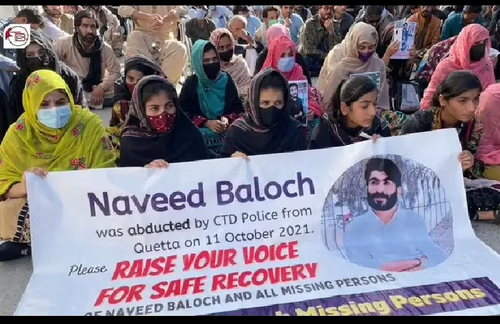
It argued that the same pattern is visible in Balochistan, where “enforced disappearances, extrajudicial killings, secret proceedings and collective punishment” have become entrenched features of governance rather than exceptions.
Highlighting the worsening situation in Khyber Pakhtunkhwa, the report said the military operations, enforced disappearances, arbitrary detention, restrictions on protest and collective reprisals are justified as part of a campaign against the Pakistani Taliban. It noted that civilians are trapped between militant violence and a security establishment that views entire districts through a lens of suspicion.
“The formula remains constant. Political demands become security threats. Protesters become terrorists. Journalists become foreign agents. Missing persons become militants after their deaths. Elections remain legitimate until people vote or demonstrate in ways unacceptable to Rawalpindi,” it stated.
Emphasising that Europe is aware of the abuses by Pakistani authorities and cannot plausibly claim ignorance, the report said, “The European Commission publishes monitoring reports. European parliamentary delegations visit Pakistan. Human rights organisations submit evidence. Baloch activists demonstrate outside European institutions. Pakistani journalists, opposition leaders and lawyers describe an increasingly authoritarian system in which the military controls political life, civilians are tried under security legislation, and courts are used to regularise decisions taken elsewhere.”
–IANS
scor/as