




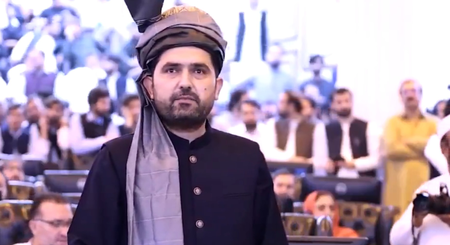
Islamabad, Feb 5 (IANS) Pakistan’s Khyber Pakhtunkhwa province faces a deepening political confrontation between Chief Minister Sohail Afridi and Governor Faisal Karim Kundi, increasing the escalating terrorism threat in the volatile region, a report has stated.
Afridi’s recently reviewed the Safe Cities project. However, Kundi accused him of causing violence through protests while ignoring security duties, a report in Afghan Diaspora Network detailed. Pakistan’s Federal Information Minister Attaullah Tarar has slammed Afridi for raising questions on terrorists using Afghan soil, showcasing differences between federal and provincial government amid increasing attacks.
Sohail Afridi chaired high-level meetings in Peshawar, Dera Ismail Khan, Bannu, and Lakki Marwat for implementing Safe Cities initiative. Officials reported installing cameras at key places – 711 in Peshawar, 88 in Dera Ismail Khan, 76 in Bannu, and 47 in Lakki Marwat.
He ordered phased expansion to the remaining areas and merged districts like Tank, North Waziristan and Karak. This initiative is aimed to enhance surveillance, crime prevention and police capacity through command centers, positioning it as a cornerstone for provincial stability.
“Governor Kundi, however, portrays these efforts as distractions from dangers. In a press conference, he lambasted Afridi for abandoning the province to lead political protests elsewhere, labeling the law-and-order collapse as deteriorating. Kundi highlighted daily targeting of police, soldiers, and officials, citing specifics like seven officers killed in a Tank IED attack on a police vehicle and surges in DI Khan and Bannu,” Shinwari, a freelance journalist based in Pakistan, wrote in a report in Afghan Diaspora Network.
“He demanded the provincial government back military operations back, enhance police and Counter-Terrorism Department (CTD) capabilities, and train merged Levies forces, while questioning drone-delivered explosives’ origins, implying Afghan links without mincing words. Kundi urged unity with federal institutions over partisan games, warning that Talibanisation gains ground when leaders prioritize rallies over borders,” the journalist wrote.
Tarar criticised Afridi for his remarks on Afghan soil, terming it as supporting the terrorist narrative and slamming him for downplaying threats from groups like Tehreek-e-Taliban Pakistan (TTP). Kundi called for cooperation between federal and provincial authorities to stabilise Khyber Pakhtunkhwa, slamming Pakistan Tehreek-e-Insaf’s (PTI) governance failures in health, education and infrastructure.
Terrorism data has revealed the severity of the crisis. In 2024, Khyber Pakhtunkhwa witnessed 702 terror incidents, causing 1,363 fatalities which included 288 civilians, 421 security forces, 654 militants, an increase of 44.84 per cent from 2023’s 941 deaths, according to a report in Afghan Diaspora Network.
The number further increased in 2025 with Counter-Terrorism Department (CTD) documenting 1,588 cases, over 500 attacks, and 510 police-targeted strikes. As many as 420 militants were killed and 1244 suspects were arrested by Pakistani security forces. However, districts like Bannu, Dera Ismail Khan, Lakki Marwat, Hangu, and Peshawar continued to face attacks, with many TTP assaults traced to Afghan border havens.
–IANS
akl/as