




New Delhi, Jan 15 (IANS) Poor governance and mismanagement due to political interference are leading to huge losses in Pakistan’s state-owned enterprises, after which they are put up for distress sale at throwaway prices, a Pakistani media report said.
An article in Pakistan’s Express Tribune points out that instead of reforming governance early, successive governments postpone difficult decisions. State-owned enterprises are routinely retained despite declining performance, political interference, and weak accountability. Only after they have accumulated massive losses and unsustainable debt does privatisation suddenly become the chosen solution.
This pattern repeats itself across sectors with striking consistency. Professional management is gradually replaced by political appointments, commercial discipline erodes, and inefficiencies become normalised. Selling such companies after years of neglect and pouring in public funds, socialises losses and privatises gains, the article pointed out.
Privatisation in Pakistan has rarely been a deliberate or well-planned economic reform but a series of fire sales.
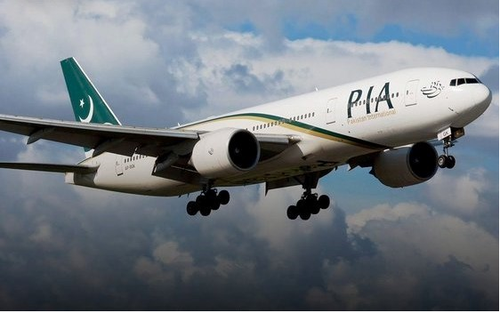
PIA illustrates this failure vividly. Once a respected regional airline, PIA was undermined by overstaffing, political meddling, and the absence of business logic. Successive governments treated the airline as a source of patronage rather than a commercial entity. Billions of rupees were spent to keep it afloat while service quality deteriorated and competitiveness vanished. Its eventual privatisation was not strategic; it was an admission of prolonged governance failure, the article stated.
Supporters of privatisation often cite telecom major PTCL as evidence that private ownership improves performance. Indeed, PTCL did achieve operational and technological improvements after privatisation. Network modernisation and service expansion did take place.
Yet this example also exposes the deep flaws in Pakistan’s privatisation practices. Years later, thousands of former government employees and pensioners remain trapped in litigation over pensions, service regularisation and post-privatisation rights. These unresolved disputes highlight how human and legal costs were treated as secondary concerns. They reveal a process focused on completing transactions rather than safeguarding institutional responsibility, the article states.
It also highlights that equally misleading is the assumption that privatisation automatically benefits consumers through lower prices. Pakistan’s own experience contradicts this belief. K-Electric stands as a clear example. Despite privatisation, electricity tariffs have not declined but instead risen to record levels. Without robust regulation, privatisation merely replaces a public monopoly with a private one, often with greater pricing power and less accountability.
It also cites the example of British rail which, after privatisation, has become fragmented, prone to delays, burdened by high fares and dependent on ageing infrastructure. In contrast, European countries, such as Germany and France, that retained public ownership, operate modern, high-speed rail networks that outperform Britain’s privatised system in reliability and efficiency, the article added.
–IANS
sps/vd