



New Delhi, Nov 3 (IANS) Pakistan is estimated to possess mineral reserves worth around $7 trillion, including substantial deposits of copper, gold, rare earth elements, tungsten, and antimony.
With its economy in a deepening crisis, Islamabad is increasingly looking towards these vast mineral resources as a potential source of economic revival and foreign investment.
The decision to impose an emergency and Governor’s rule in Khyber Pakhtunkhwa (KP) appears to be driven, among other considerations, by Islamabad’s desire to remove the provincial government led by Pakistan Tehreek-e-Insaf (PTI) and clear the way for greater foreign participation in the region’s mining sector.
The official reason that Pakistan cited for the decision relating to KP was law and order and how the PTI government had failed to control it. The real reason was to get the PTI out of the way, as it created a lot of problems for Pakistan where the mining sector is concerned.
An official said Pakistan’s intentions are now clear and the Shehbaz Sharif government is moving fast to prepare fresh legislation and a framework to allow international players to take part in the mining sector not just in the KP region, but in Balochistan as well.
All eyes are on the Pakistan Minerals Investment Forum (PMIF) 2026, which is set to be held between November 12 and 13.
The event would see the participation of international mining bigwigs and investment giants. They would take part in the event, which will also host policymakers from Pakistan and across the globe, the official said.
“The Sharif government is working overtime to prepare legislation to ensure that any minerals deal would have maximum legal protection, investment guarantees and contractual security,” the official said.
Another official said that while Pakistan may get everything clear on paper, there are practicalities when it comes to both these regions.
The security landscape is a nightmare owing to groups such as the Balochistan Liberation Army (BLA), Balochistan Liberation Front (BLF) and Tehreek-e-Taliban Pakistan (TTP). These groups pose the maximum risk to any investment in these regions, and who knows this better than the Chinese.
The Sharif government is aware of the security situation and is prepared to battle the TTP, BLA, and BLF using brute military might. In order to do so, it wanted friendly leaders heading these regions. In Balochistan, there is an Islamabad-friendly leader in Mir Sarfaraz Bugti.
In the KP region, getting rid of an unfriendly PTI remained the only option so that mineral deals could be signed without any obstruction.
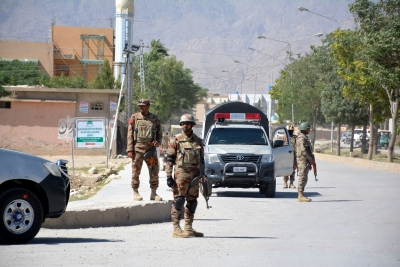
An Intelligence Bureau official said that the security situation is about to get worse in KP and Balochistan as groups such as the TTP and BLA will step up the offensive.
Pakistan will undoubtedly use its military might against these groups, but any such operation would come at an enormous cost, potentially resulting in the loss of thousands of lives across these regions.
Officials say that terror outfits like the Al-Qaeda in the Sub-Continent (AQIS) would look to capitalise on this situation. Pakistan is inviting investments mainly from the West, and this gives AQIS a big talking point against this.
Al Qaeda has consistently maintained that its fight is directed against the West. Pakistan’s mineral deals, which are expected to involve substantial Western investment, could therefore provide groups such as AQIS with an opportunity to step up their propaganda campaign.
The November meeting is being closely watched by several stakeholders, as it offers Pakistan an opportunity to project itself as a major destination for global investment in the mineral sector.
The road ahead would, however, be hard, as groups such as the TTP and BLA would step up the offensive in proportions that these regions may have never seen before, an official said.
–IANS
vn/snj/skp