Brussels, Oct 10 (IANS) Pakistan’s record of blasphemy cases over the past decade, including cases emerging in 2026, highlights the human cost of religious accusations backed by criminal law. Such accusations can begin as whispered allegations and end in imprisonment, death sentences or mobs gathering outside family homes, a report has stated.
It noted that for Christians, Hindus and Ahmadis across Pakistan, the threat extends beyond extremists operating outside the law.
“Pakistan’s legal framework itself contains provisions that criminalise religious expression and, in the case of Ahmadis, restrict how a community can identify and practise its faith. Across the border, India follows a fundamentally different constitutional model. It has no official state religion. Its Constitution describes the country as a secular democratic republic and guarantees freedom of conscience and the right to profess, practise and propagate religion,” a report in the European Times detailed.
It noted that the contrast becomes particularly stark when Pakistan’s blasphemy laws are examined through the experiences of its religious minorities over the past decade.
According to the report, Pakistan’s blasphemy provisions have repeatedly been misused to settle personal scores, property disputes and other forms of social hostility. It highlighted that in 2022, Hindu teacher Notan Lal was sentenced to life imprisonment after a student accused him of insulting Prophet Muhammad. The student later reportedly admitted to fabricating the charge after being reprimanded by the teacher.
In another case that year, Christian bicycle mechanic Ashfaq Masih was sentenced to death over accusations of making blasphemous remarks. Imprisoned since 2017, Masih maintained that personal and financial disputes were behind the accusation, European Times mentioned.
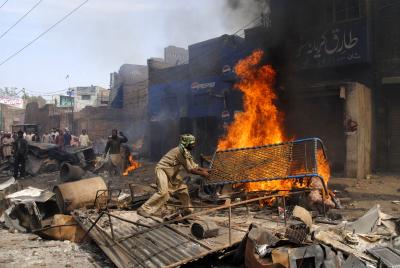
“The consequences extend beyond courtrooms. In February 2023, a mob stormed a police station in Nankana Sahib and lynched a man detained on blasphemy allegations. In August that year, hundreds attacked a Christian settlement in Jaranwala after two Christians were accused of desecrating the Quran. Churches, homes and a cemetery were vandalised or set on fire,” said the report, highlighting the alarming level of violence across Pakistan that followed blasphemy accusations.
The report noted that Pakistan’s constitutional designation of Islam as the state religion coexists with criminal blasphemy laws and explicit restrictions on Ahmadis. Cases involving Christians, Hindus and Ahmadis illustrate how religious accusations can escalate into arrests, imprisonment, death sentences or mob violence.
In contrast, the report said, India’s constitutional framework does not make adherence to one religion a prerequisite for citizenship. It highlighted that religious freedom is enshrined in the country’s secular Constitution, which safeguards freedom of conscience, worship and the right of religious communities to manage their institutions.
“That difference matters most when faith becomes contested. In Pakistan, the blasphemy framework can place the criminal law directly at the centre of a religious accusation, while in India, the constitutional model places religious freedom within a secular legal order in which no faith is designated as the religion of the State,” the report stated.
–IANS
scor/as