



Rome, Feb 2 (IANS) China may be compelled to reassess the scope of its engagement in Pakistan if Chinese officials can no longer travel safely to Islamabad. For now, every crisis confronting Islamabad poses a threat to the progress of China–Pakistan Economic Corridor (CPEC) and undermines Beijing’s high-profile investment in the region, a report said on Monday.
According to a report in the Italian Institute for International Political Studies (ISPI), China’s ambitions to assert primacy over Afghanistan and Pakistan and to build an economically prosperous and stable region along its western and southwestern frontiers appear less achievable in light of the recent developments.
In October 2025, escalating tensions between Pakistan and the Afghan Taliban erupted into a deadly exchange of missile strikes along their shared border.
The once-strong alliance between the two sides has been on a downward trajectory since the Taliban regained power in Kabul in September 2021.
“Having made a $62 billion bet on Islamabad a decade ago, Beijing is desperate for stability in the region. However, facing rising domestic militancy and an increasingly hostile neighbourhood, Pakistan’s troubles only seem to be growing, much to China’s dismay,” the report detailed
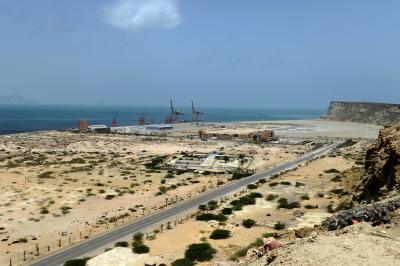
“In recent years, China has intensified efforts to gain leverage in Pakistan through greater economic investment under the purview of the China-Pakistan Economic Corridor (CPEC). The central purpose of CPEC, so far as Beijing is concerned, is to provide China with access to the Arabian Sea through a network of infrastructure projects, culminating in Gwadar Port in the province of Balochistan,” it added.
The report stressed that domestic unrest across Pakistan emerged as the primary reason limiting China’s ability to derive benefits from its investments, disrupting CPEC projects and stalling progress on multiple fronts.
“In Balochistan, frequent attacks by the Balochistan Liberation Army (BLA) have hindered meaningful development on key CPEC initiatives in the province, including its flagship project, Gwadar Port. The security situation has become so severe that the inauguration of a CPEC-funded airport in Gwadar in the latter half of 2024 had to be held online, owing to the significant risk facing senior officials had they attended in person,” it mentioned.
“Aside from the BLA, Pakistan has faced a grave security threat from the Tehreek-e-Taliban Pakistan (TTP), the country’s own Taliban offshoot. Much like the BLA’s operations in Balochistan, the TTP have posed a major challenge to Pakistani security forces and Chinese infrastructure projects in Khyber Pakhtunkhwa,” it further stated.
The report noted that regardless of how Pakistan and Afghanistan evolve in the wake of their military exchange and continued TTP attacks, one reality remains unchanged: “so long as Pakistan remains unstable, China stands to lose the most”.
–IANS
scor/as