




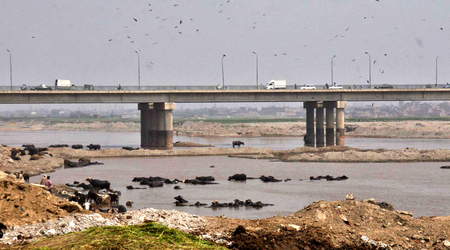
Islamabad, July 1 (IANS) Pakistan’s negligence in water management is responsible for the water issues that it has been facing in Indus Basin. Pakistan will continue to have water woes until it does not work on water resource management by improving their systems, crop water productivity, ground water management, storages, agricultural practices, institutional reforms, monitoring systems, use of modern technology and resolves disputes among its provinces, a report has detailed.
Pakistan keeps accusing India for the water issues it faces even though India has kept the Indus Water Treaty (IWT) in abeyance until Pakistan credibly and irrevocably abjured its support for cross-border terrorism. However, its important to consider real issues regarding the so-called water scarcity reported in Pakistan, according to a report in Liberia-based daily ‘The New Dawn;.
Following the heinous terror attack in Jammu and Kashmir’s Pahalgam in April 2025, India had exercised its rights as a sovereign nation under international law and placed Indus Water Treaty in abeyance until Pakistan stops its support for cross-border terrorism.
“As per various research Institutes, Pakistan, on an average receives about 140 Million Acre Feet (MAF) of water annually in Indus basin from western rivers which is still more than 135 MAF, estimated at the time of Treaty. However, in Eastern rivers, flows are reported to have gotten reduced by about 15 per cent from 33 MAF which was assessed at that time. So, why all that rhetoric against India. If we dive deep into the issue, the truth is not far off. Out of about 140 MAF, Pakistan’s diversion for irrigation use is only about 104 MAF, rest is either wasted in system or goes to sea,” Former Chairman of Central Water Commission and ex-officio Secretary to Government of India and Former Indian Commissioner Indus, Kushvinder Vohra, wrote in The New Dawn.
“The real issue about so-called water scarcity in Pakistan is mismanagement of the water received and host of other factors, which are barely being discussed by experts in Pakistan. Hardly any public discussion takes place about inaction and failure of stakeholders in Pakistan (including the Government of Pakistan) in managing the precious water resources, especially when the ground realities have changed immensely since signing of the Treaty in 1960. Could this be a deliberate agenda to always blame India and play the victim card to divert attention from the real issue that is mismanagement of water resources in Pakistan?,” the expert questioned.
The World Bank (WB) Group study report titled ‘Pakistan – Getting more from water’ (information updated upto September 2018), took a long term view of the water security of Pakistan – up to 2047, stating that Pakistan is well endowed with water (including Indus Basin) and only 16 other countries have more water. However, water availability per person is low considering it is sixth most populous country.
As per the report, Pakistan does not make the best use of its water endowment and water security is affected due to poor water resource management. It further stated that water resource management in Pakistan is compromised due to poor water data governance, weak planning, pollution, over exploitation of ground water (GW), low water productivity, weak processes that stop reliable flood and drought forecast. Over 90 per cent of water in Pakistan is used for irrigation. So, it is important for Pakistan to reduce water losses and improve water productivity to tackle the current challenges.
Furthermore, Pakistan has not created sufficient storage and has a storage capacity of only 15 per cent of annual river flow. Pakistan can only store 30 days of water. Pakistan will not be able to achieve reliable Rabi irrigation without proper storage capacity.
“Pakistan needs to come out of the mindset during the time of negotiation of IWT, when it alleged that India interferes with their waters in Indus basin. Since then it has been branding India as upper riparian that can turn off their tap and has been objecting on each and every hydro electric project in India, although permitted under IWT. Pakistan’s negligence in water management in fact is responsible for their water woes in Indus basin,” mentioned Vohra.
“No amount of water flow can help Pakistan unless it works on Integrated Water Resource Management by improving their systems, crop water productivity, GW management, storages, agricultural practices, institutional reforms, monitoring systems, use of modern technology etc and resolving inter-provincial disputes. Public discourse regarding above issues shall help Pakistan work towards sustainable use of water. Hiding the real issues and focus on imaginary issues by blaming India is not going to be helpful,” he added.
–IANS
akl/as